Index investing gives you a simple way to own broad sections of the market through diversified funds instead of trying to predict which individual investments will win. For many investors, that combination of diversification, low costs, and long-term discipline is the foundation of a more reliable portfolio.
One thing I find fascinating about investing is how often people assume that better results require more activity. It feels natural to believe that constant research, market predictions, and stock selection should produce superior outcomes.
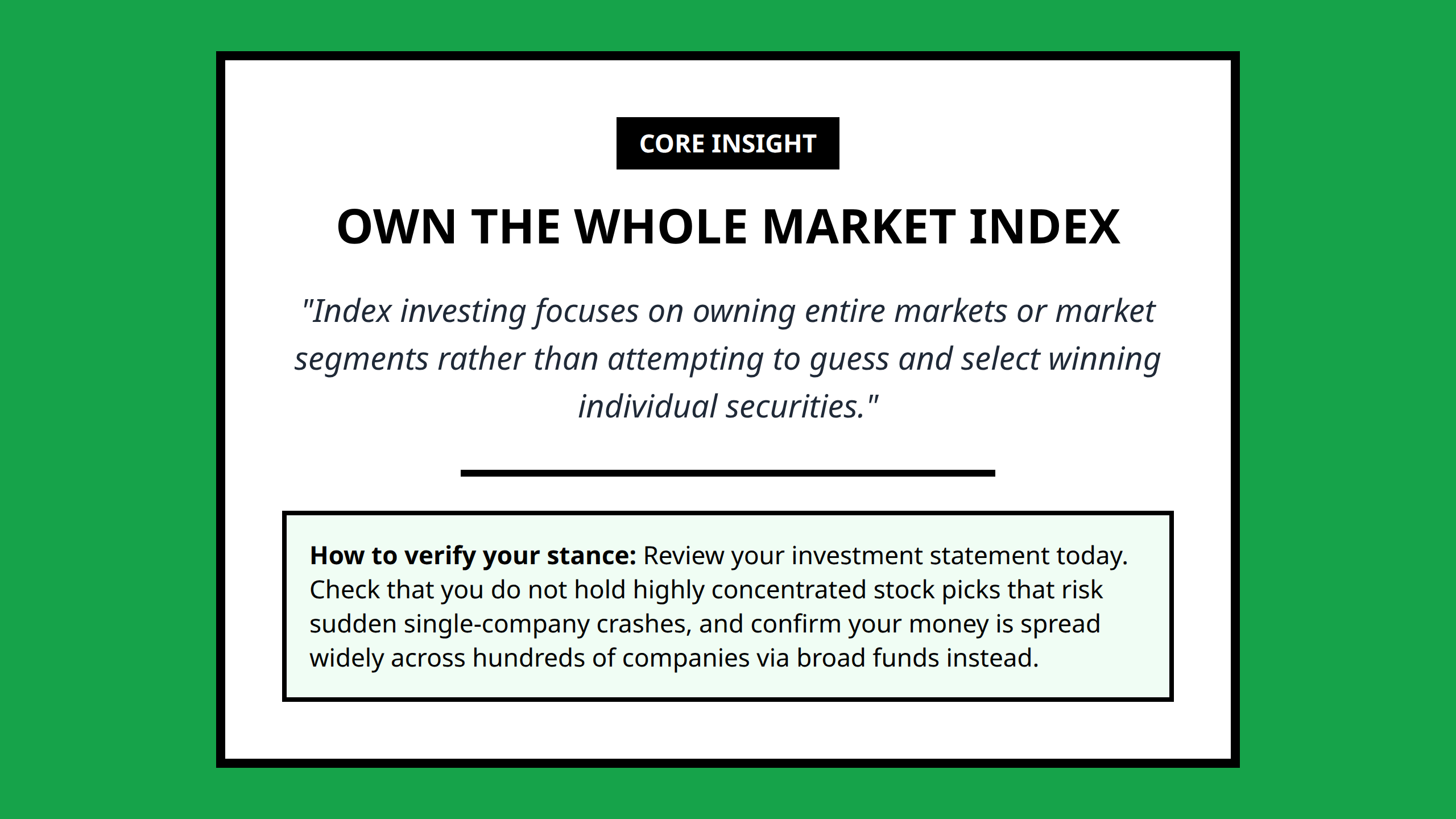
Yet a different approach has gained popularity by doing almost the opposite. Instead of trying to identify tomorrow’s winners, index investing focuses on owning entire markets or major market segments. That shift changes not only how a portfolio is built, but also how an investor thinks about risk, diversification, and long-term success.
Takeaways
- Index investing focuses on owning markets rather than selecting individual securities.
- Diversification helps reduce the impact of any single investment performing poorly.
- Keeping costs low can improve long-term portfolio efficiency.
- Stocks and bonds often play different roles inside a balanced portfolio.
- Regular rebalancing helps maintain the asset allocation you originally planned.
What Index Investing Is and Why It Matters
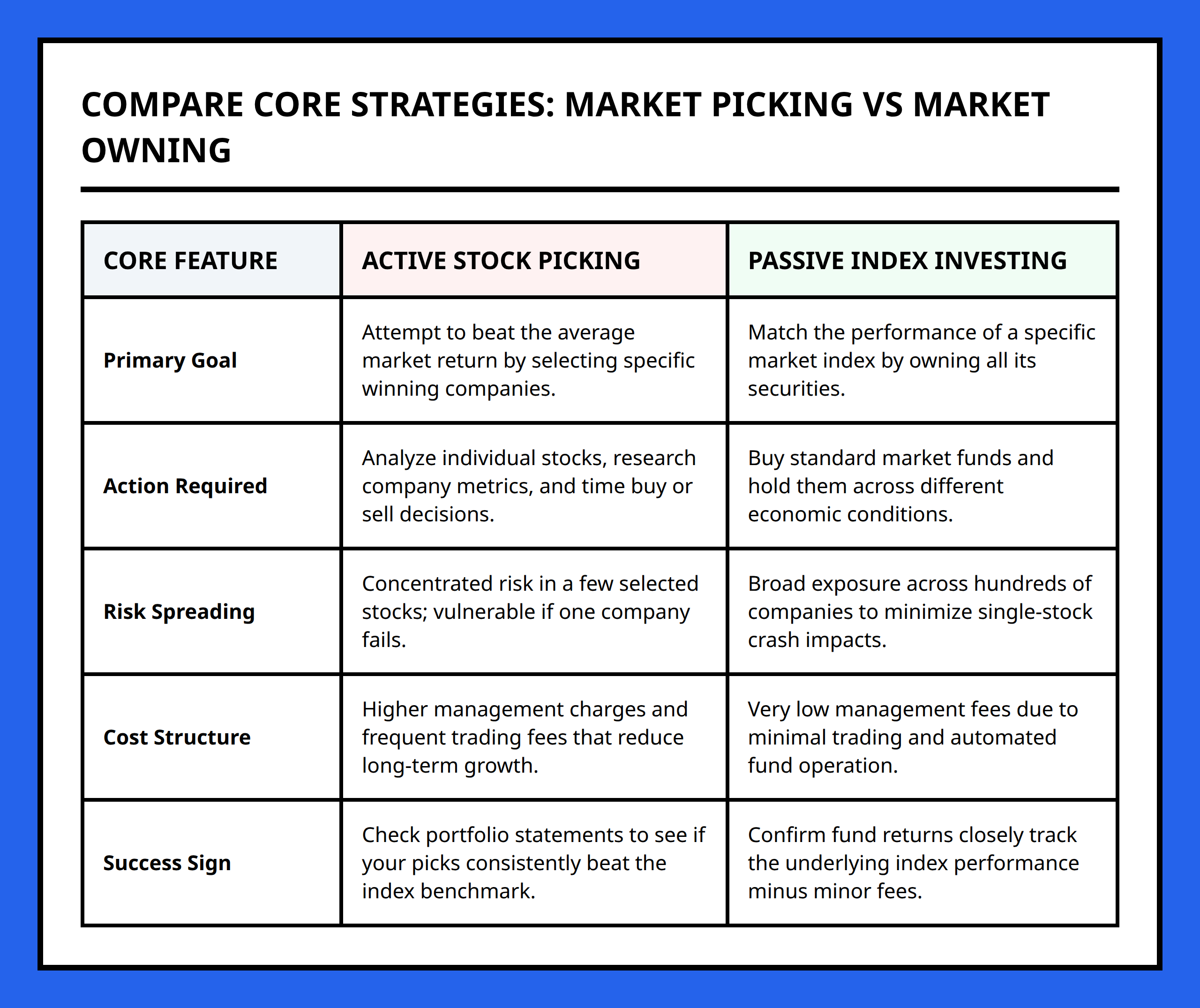
At its core, index investing is about participating in markets instead of trying to outguess them.
An index is a collection of investments organized according to specific rules. Index funds and exchange-traded funds (ETFs) attempt to track those indexes. Rather than buying shares of a few selected companies, investors can gain exposure to hundreds or even thousands of securities through a single fund.
This approach offers an important advantage: broad diversification. When a portfolio depends heavily on a small number of investments, one poor decision can cause significant damage. A diversified index fund spreads risk across many holdings.
Imagine two investors. One places a large portion of savings into a single company because it appears promising. Another owns a broad market index fund. If that company struggles, the first investor may face substantial losses. The second investor still owns hundreds of other businesses, reducing the impact of any single disappointment.
Index investing also changes the objective. The goal is not to beat every other investor. The goal is to capture the performance of a market or market segment efficiently and consistently over time.
The Core Components of an Index Portfolio
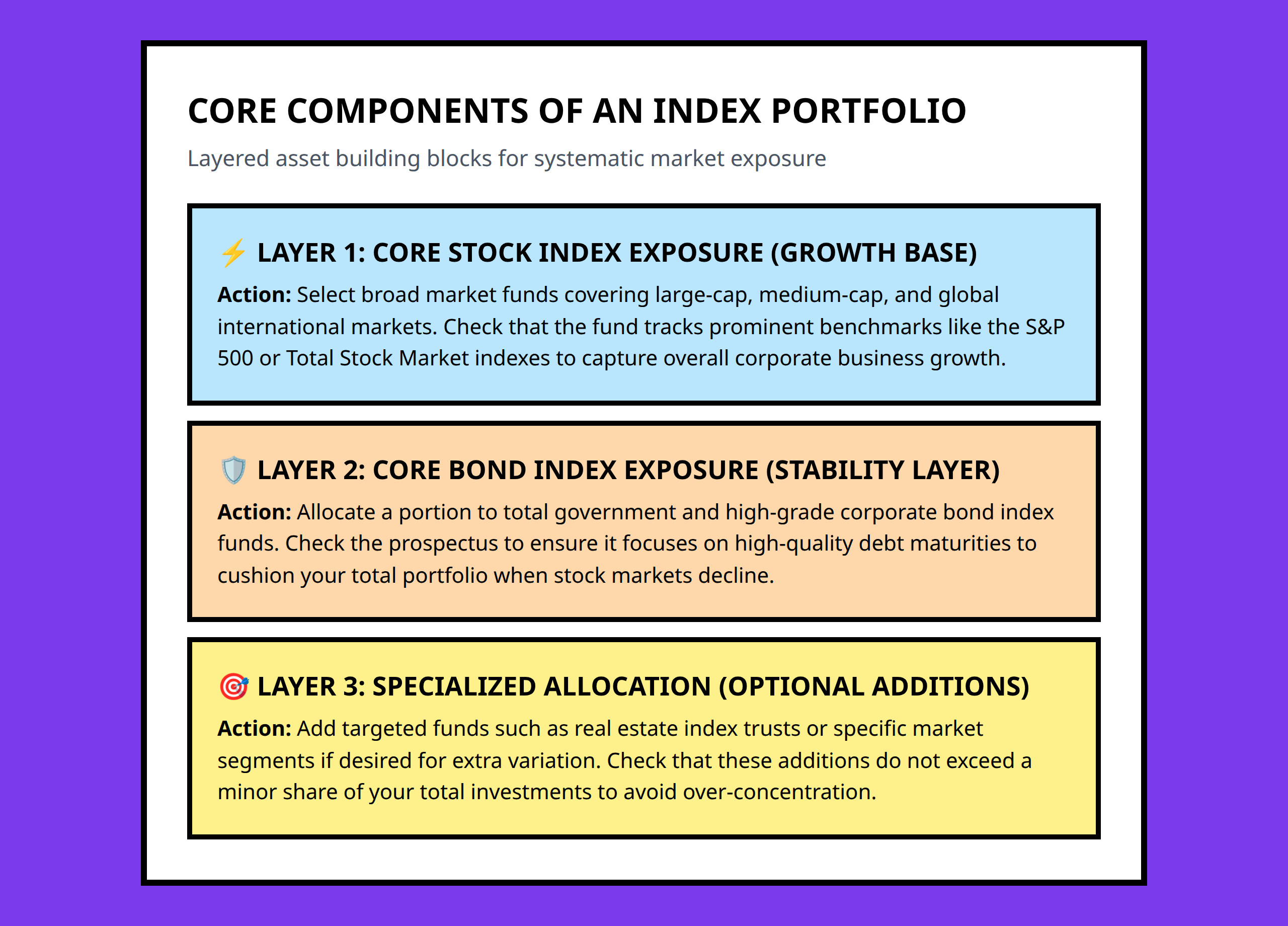
A well-built index portfolio usually combines multiple asset classes rather than relying on one investment category.
Stocks are often the primary engine of long-term growth. Broad stock index funds provide exposure to large portions of the market and may include domestic companies, international companies, or both.
Bonds typically serve a different purpose. While they may not offer the same growth potential as stocks, they can help provide stability and predictability within a portfolio. Many investors combine stock index funds with bond index funds to balance growth and risk.
Some portfolios may also include additional asset categories such as real estate investment trusts (REITs) or commodity-related investments as part of a broader diversification strategy.
| Asset Type | Primary Role | Typical Objective |
|---|---|---|
| Stock Index Funds | Growth | Long-term capital appreciation |
| Bond Index Funds | Stability | Income and reduced volatility |
| REIT Funds | Diversification | Exposure to real estate markets |
| Commodity Funds | Diversification | Additional portfolio balance |
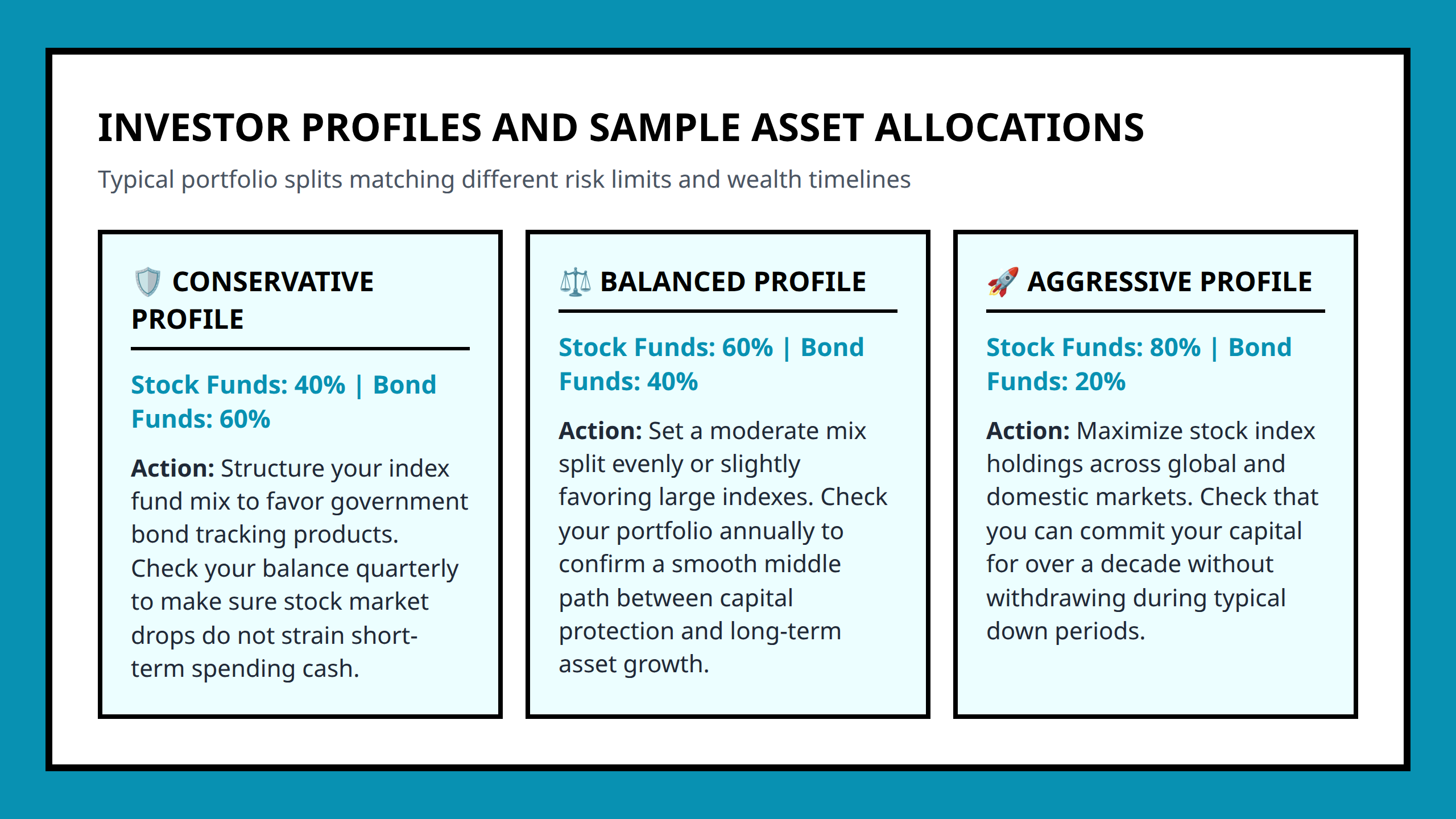
The exact mix depends on personal goals and risk tolerance. Someone with decades before retirement may choose a larger allocation to stocks. Someone seeking greater stability may prefer a larger bond allocation.
Building and Maintaining a Long-Term Portfolio
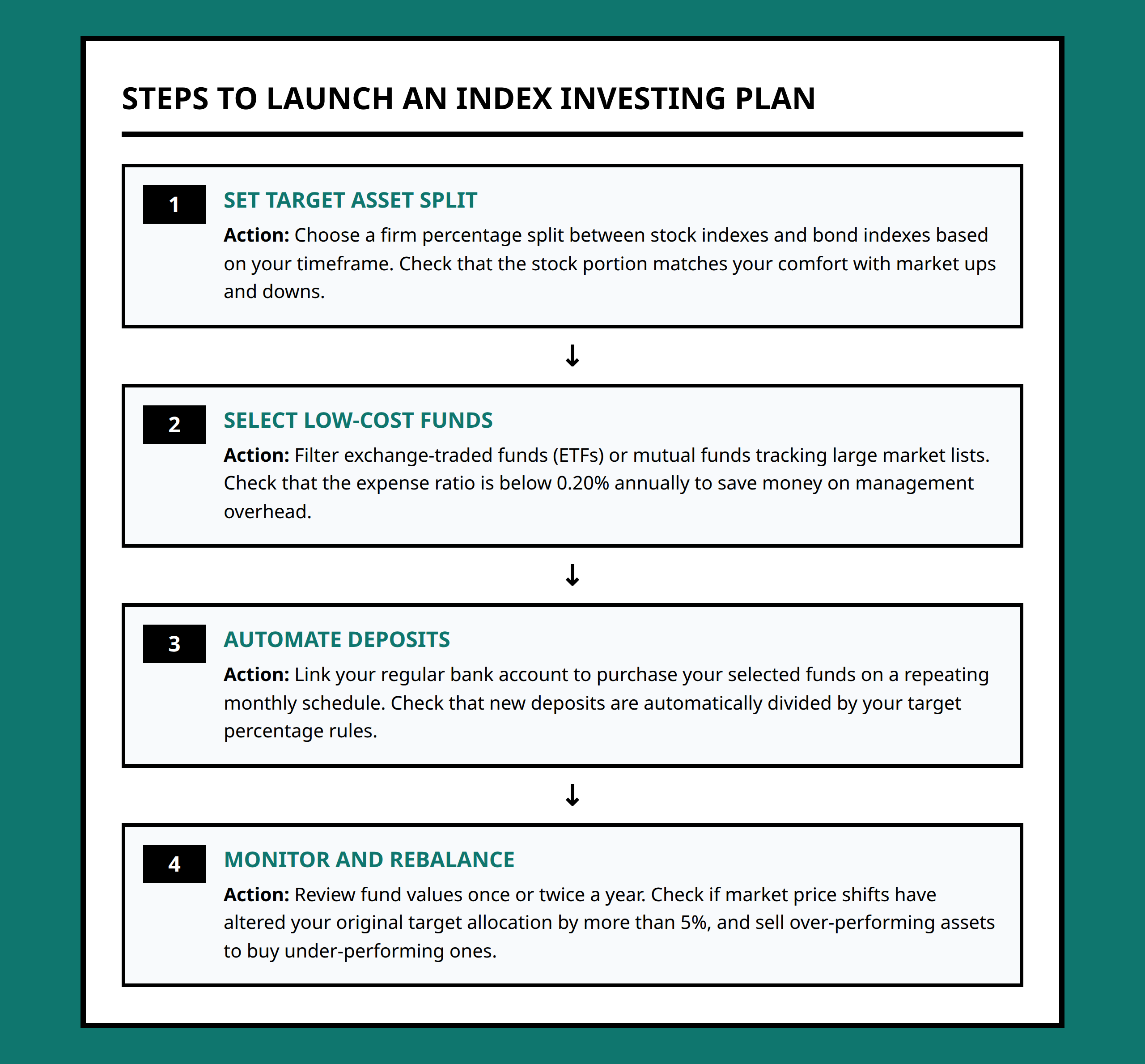
The strength of index investing comes not only from fund selection but also from portfolio management.
The first step is establishing an asset allocation. Asset allocation refers to how much of the portfolio is assigned to stocks, bonds, and any additional investments. This decision often has a greater impact on portfolio behavior than selecting between similar funds.
Once the allocation is established, discipline becomes essential. Markets do not move evenly. Over time, strong-performing investments can become a larger percentage of the portfolio than originally intended.
This is where rebalancing becomes useful. Rebalancing means adjusting holdings to return the portfolio closer to its target allocation.
For example, suppose an investor starts with a portfolio designed to hold more stocks than bonds. After a period of strong stock market performance, stocks may grow into a much larger share of the portfolio. Rebalancing would involve trimming some stock exposure and restoring the intended balance.
Another important lesson is resisting the urge to react to every headline. Market forecasts, television commentary, and short-term excitement can tempt investors to abandon a carefully designed strategy. A long-term approach requires accepting that temporary uncertainty is part of investing.
Many investors spend enormous energy trying to predict what happens next. Index investing shifts attention toward what can actually be controlled: diversification, costs, asset allocation, and consistent behavior.
Why Simplicity Can Be a Competitive Advantage
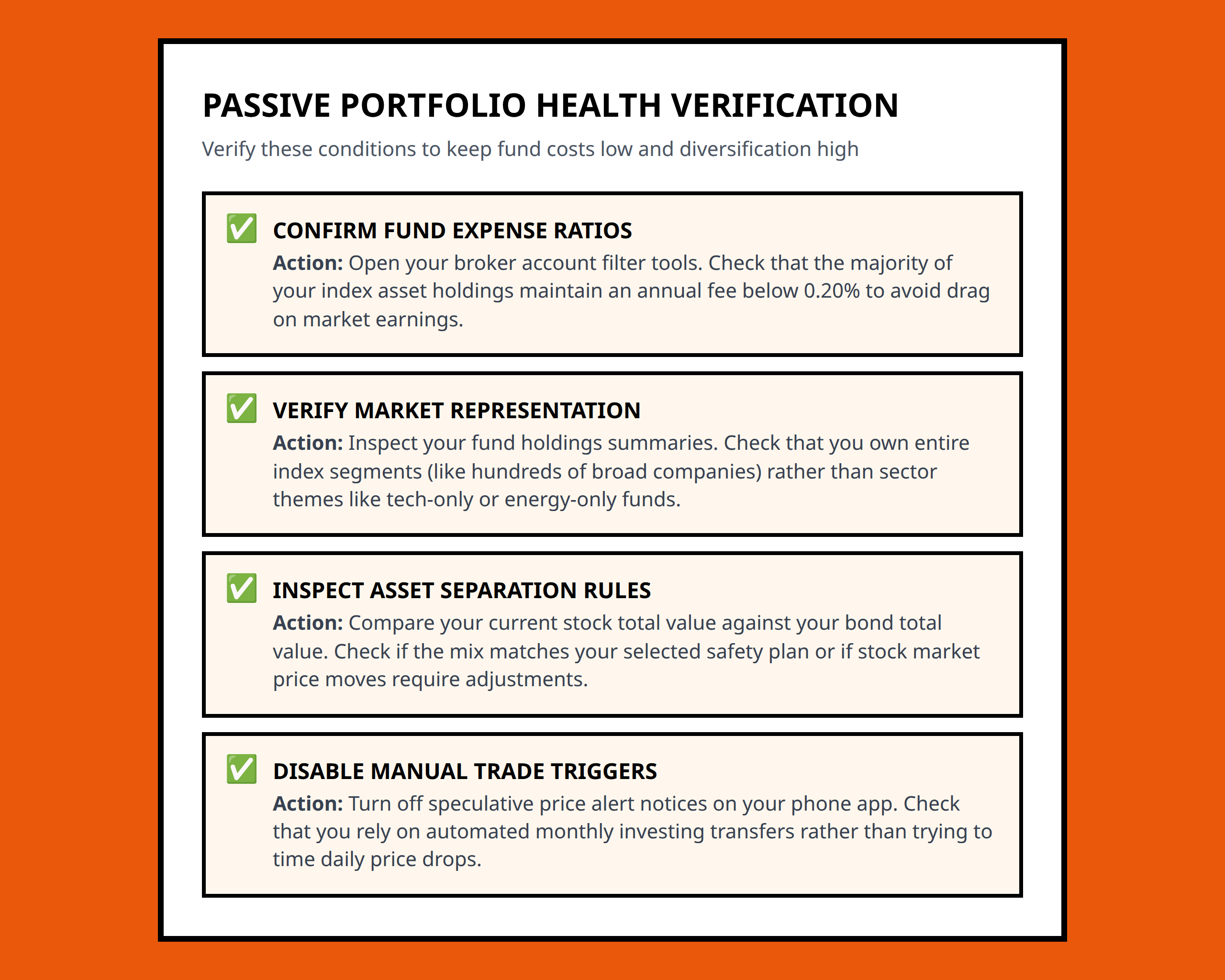
Simple portfolios are often easier to maintain than complex ones.
There is a natural tendency to believe that more funds automatically create a better portfolio. In reality, additional complexity can make monitoring and maintenance more difficult without necessarily improving results.
A carefully selected group of broad index funds may provide substantial diversification while remaining easy to understand and manage.
That simplicity offers another benefit. Investors who understand their portfolios are often better prepared to stay committed during periods of market stress. A strategy that looks impressive on paper but is difficult to follow consistently may be less effective than a simpler plan that an investor can maintain for decades.
FAQ
The most useful way to think about index investing is not as a shortcut, but as a deliberate decision to focus on what matters most. Broad diversification, sensible asset allocation, low costs, and consistent behavior may not generate exciting headlines, but they create a framework that is easier to maintain through changing markets. A practical next step is to review your current investments and identify whether each holding serves a clear role in a diversified long-term plan.
- Index: A collection of securities organized according to specific rules and used as a market benchmark.
- Index Fund: A fund designed to track the performance of a specific index.
- ETF: An exchange-traded fund that can provide index exposure while trading on an exchange.
- Diversification: Spreading investments across many holdings to reduce dependence on any single investment.
- Asset Allocation: The process of dividing a portfolio among different investment categories such as stocks and bonds.
- Rebalancing: Adjusting portfolio holdings to restore the intended asset allocation.
- REIT: A real estate investment trust that provides exposure to real estate-related investments.
References:
- https://www.youtube.com/watch?v=Za6Nfc8vfHM
- https://www.youtube.com/watch?v=MY4X78f7HFo
- https://www.youtube.com/watch?v=3k4nNG5T4KI
- https://investor.vanguard.com/investor-resources-education/portfolio-management/diversifying-your-portfolio
- https://www.fidelity.com/learning-center/smart-money/what-is-an-index-fund
- https://www.nl.vanguard/professional/vanguard-365/the-case-for-indexing
- https://www.nerdwallet.com/investing/learn/how-to-invest-in-index-funds
- https://www.navyfederal.org/makingcents/investing/index-funds.html
- https://www.investopedia.com/terms/i/indexfund.asp
- https://www.nationaldebtrelief.com/blog/financial-wellness/saving-and-investing/how-to-build-a-diversified-portfolio-thats-simple-and-goaldriven/
- https://www.youtube.com/watch?v=Nv5CiRSCVxA
