Asset allocation is the process of deciding how your portfolio is divided among stocks, bonds, and other investments. For many investors, this decision has a greater impact on portfolio behavior than the selection of any individual fund.
Many people spend a lot of time comparing funds while spending very little time deciding how those funds fit together. I find that understandable because choosing investments feels like the most important decision. Yet a portfolio is more than a collection of funds. It is a system.
A portfolio with excellent funds can still create problems if the overall structure does not match the investor’s goals, time horizon, or tolerance for risk. That is why asset allocation deserves attention before individual fund selection.
Takeaways
- Asset allocation determines how risk and opportunity are distributed across a portfolio.
- Stocks, bonds, and other assets often serve different purposes.
- The right allocation depends on goals, time horizon, and comfort with market fluctuations.
- Diversification is about how investments work together, not simply how many investments you own.
- Regular rebalancing helps maintain the portfolio structure you originally designed.
Understanding the Building Blocks of a Portfolio
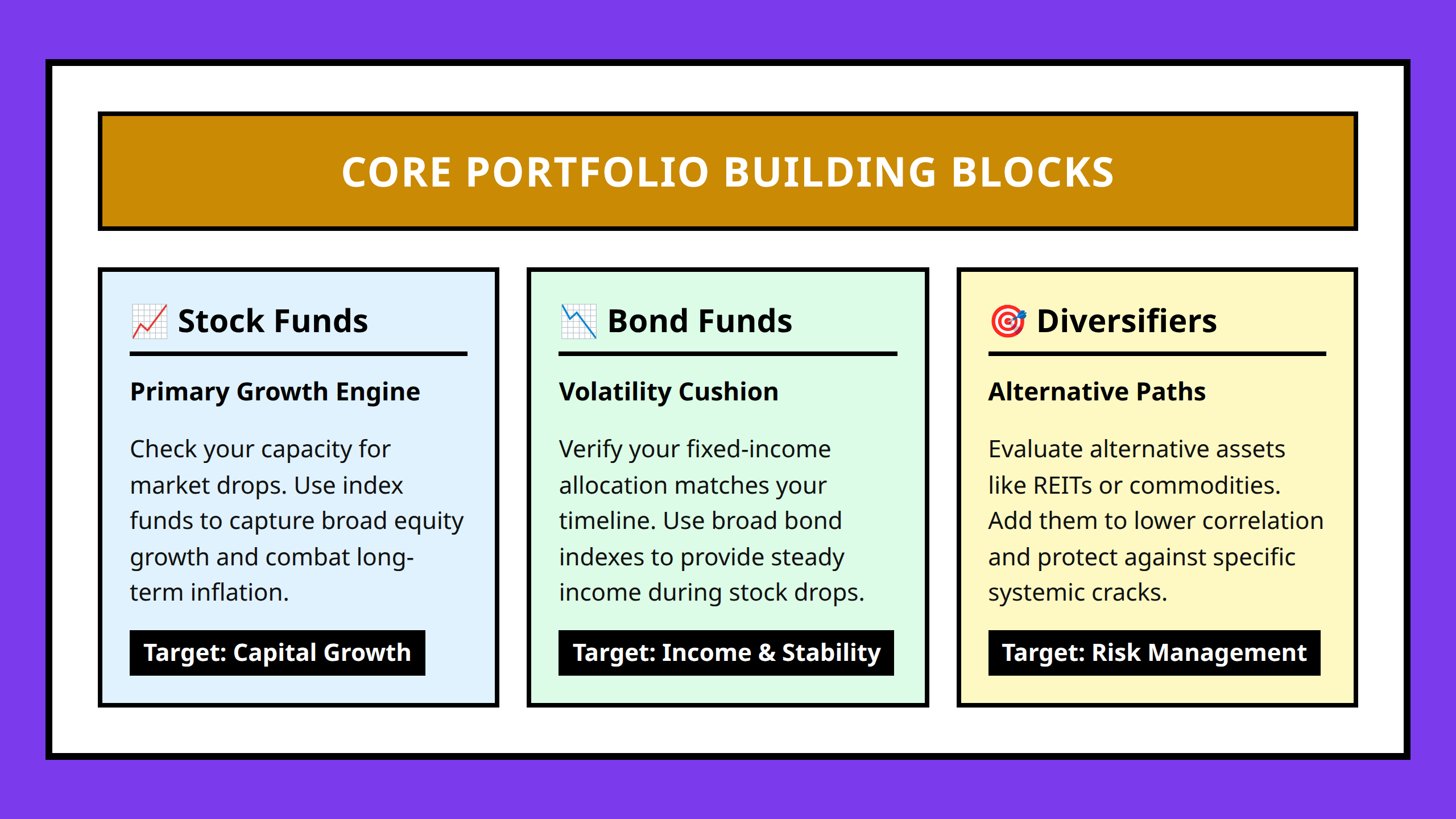
Every asset class plays a different role inside a portfolio.
Stocks are typically used as the primary source of long-term growth. Stock index funds provide exposure to large groups of companies rather than relying on the success of a few individual businesses. This broad exposure can help investors participate in overall market growth while maintaining diversification.
Bonds often serve a different purpose. Rather than focusing primarily on growth, bond funds are commonly used to provide stability and help moderate portfolio volatility. For investors who value smoother portfolio performance, bonds can play an important balancing role.
Some investors also include additional diversifiers. Real estate investment trusts (REITs) and commodity-related investments are examples of assets that may add another layer of diversification beyond traditional stock and bond holdings.
| Asset Type | Primary Purpose | Typical Portfolio Role |
|---|---|---|
| Stock Funds | Growth | Long-term appreciation |
| Bond Funds | Stability | Risk reduction and balance |
| REITs | Diversification | Real estate exposure |
| Commodities | Diversification | Additional portfolio balance |
The key insight is that no single asset class is expected to accomplish every objective. Each component contributes something different to the overall portfolio.
Designing an Allocation Strategy That Fits Your Situation
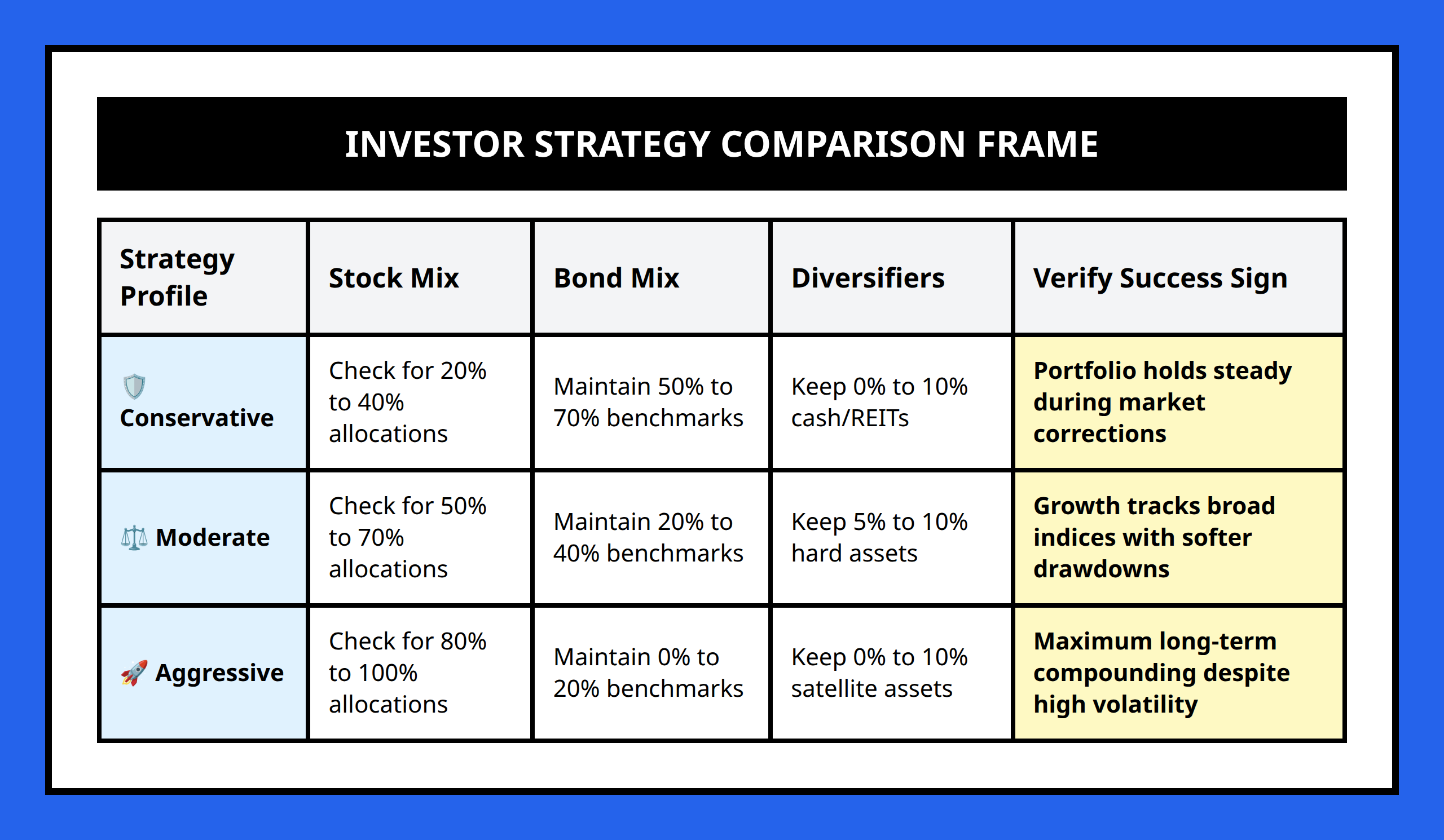
Good asset allocation begins with understanding the investor, not the market.
Three factors often deserve the most attention: risk tolerance, time horizon, and financial goals.
Risk tolerance refers to how comfortable you are with market fluctuations. Two investors can have identical portfolios on paper but react very differently during periods of market stress. An allocation that feels manageable during difficult markets is often more valuable than one that appears perfect during calm periods.
Time horizon also matters. An investor saving for a goal decades away may approach risk differently than someone who expects to use the money much sooner.
Financial objectives complete the picture. Growth-oriented investors may choose a larger allocation to stocks. Investors prioritizing stability may prefer a larger allocation to bonds.
Consider three simplified examples:
- Conservative approach: Greater emphasis on stability and reduced volatility.
- Moderate approach: A balance between growth potential and stability.
- Aggressive approach: Greater emphasis on long-term growth and market exposure.
These examples are not prescriptions. They simply illustrate how different objectives can lead to different portfolio structures.
Why Diversification Is About More Than Quantity
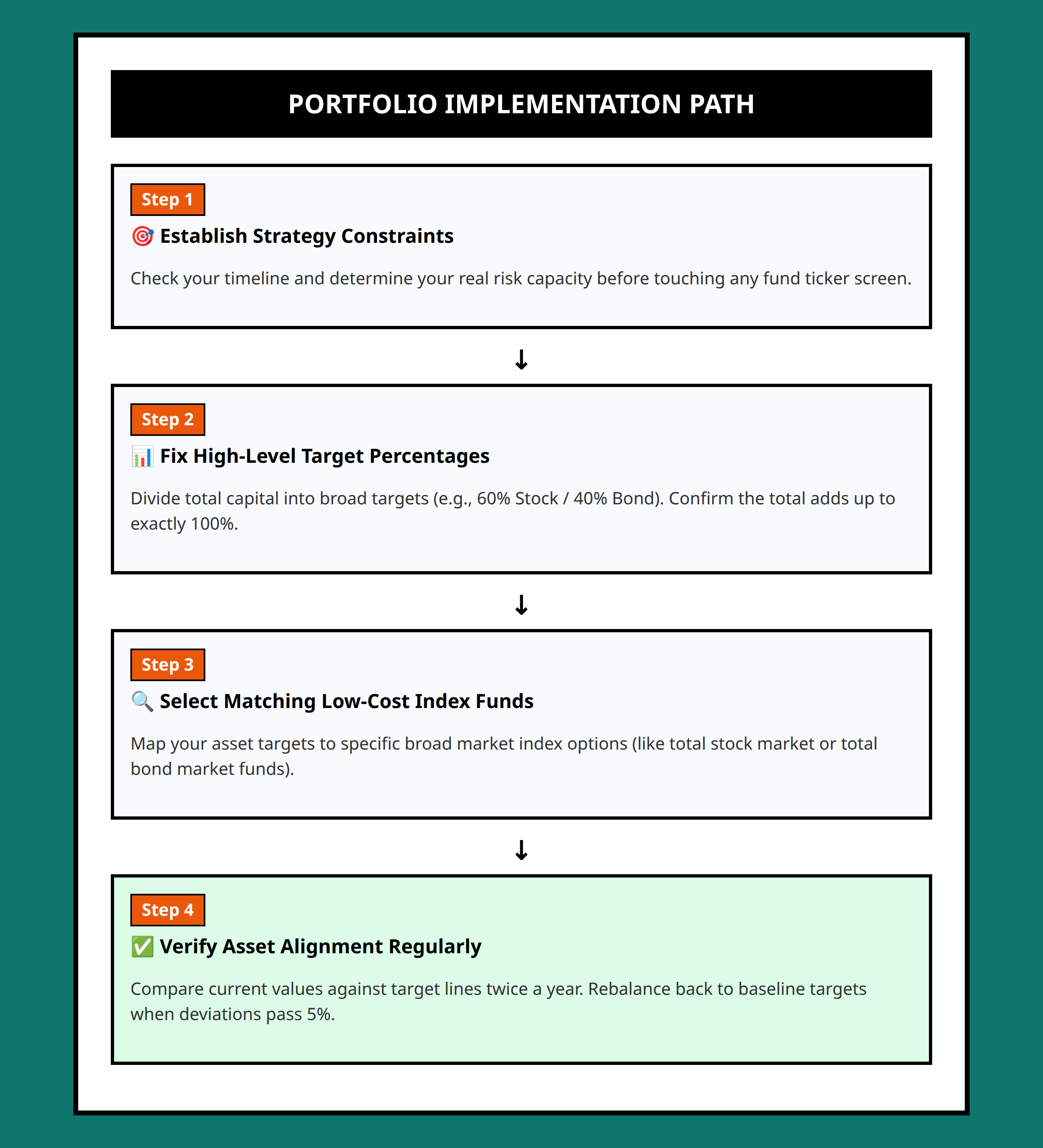
Owning many funds does not automatically create diversification.
One mistake investors sometimes make is assuming that more holdings always mean less risk. In reality, several funds may provide exposure to very similar investments.
Effective diversification comes from combining asset classes and market segments that serve different functions within the portfolio.
For example, a portfolio that includes stock funds, bond funds, and additional diversifying assets may behave differently from a portfolio made up entirely of stock funds, even if both contain multiple holdings.
When evaluating a portfolio, it is often helpful to ask a simple question: Are these investments providing distinct sources of exposure, or are they mostly variations of the same thing?
Maintaining Your Allocation Over Time

Asset allocation is not a one-time decision.
Markets change constantly. As different investments rise and fall, portfolio weights naturally drift away from their original targets.
This is where rebalancing becomes important. Rebalancing involves adjusting holdings so that the portfolio remains aligned with the intended allocation.
Imagine an investor whose portfolio was originally designed with a balanced mix of stocks and bonds. After a prolonged period of strong stock performance, stocks may occupy a larger share of the portfolio than originally planned. Without rebalancing, the investor may be taking more risk than intended.
Rebalancing helps restore the portfolio structure and keeps investment decisions connected to long-term objectives rather than recent market performance.
Life changes can also justify allocation adjustments. Retirement plans, major purchases, changing income needs, or evolving financial goals may require a portfolio review.
FAQ

Many investors search for the perfect fund, but portfolio construction often starts with a more important question: how should the assets work together? Asset allocation provides the framework that turns individual investments into a coherent strategy. Before researching another fund, review your current allocation and ask whether it still reflects the goals you are trying to achieve.
- Asset Allocation: The process of dividing a portfolio among different investment categories such as stocks, bonds, and other assets.
- Diversification: A strategy that spreads investments across multiple assets to reduce dependence on any single investment.
- Stock Fund: A fund that primarily invests in stocks and is often used for long-term growth.
- Bond Fund: A fund that primarily invests in bonds and is often used to provide stability within a portfolio.
- REIT: A real estate investment trust that gives investors exposure to real estate-related assets.
- Rebalancing: The process of adjusting portfolio holdings to restore the desired asset allocation.
References:
- https://investor.vanguard.com/investor-resources-education/education/model-portfolio-allocation
- https://www.investor.gov/additional-resources/general-resources/publications-research/info-sheets/beginners-guide-asset
- https://www.fidelity.com/viewpoints/investing-ideas/guide-to-diversification
- https://www.reddit.com/r/bogleheads/comments/1o94x3d/the_most_baffling_money_management_thing_how_do/
- https://www.reddit.com/r/investing/comments/1i6m61l/help_me_understand_the_necessity_to_diversify/
- https://www.bogleheads.org/wiki/Asset_allocation
- https://www.merrilledge.com/article/what-is-asset-allocation
- https://www.simplify.us/etfs-use-case/building-modern-6040-portfolio
- https://www.sec.gov/about/reports-publications/investorpubsassetallocationhtm
- https://www.blackrock.com/us/financial-professionals/insights/60-40-portfolios-alternatives
