Economic turning points matter because they can reshape entire markets. When a long-standing trend breaks and a new one begins, assets that were ignored can become valuable while popular investments can lose their advantage.
Most investors spend their time watching quarterly earnings, economic reports, or the latest market headlines. Those things matter, but I believe many people miss a larger question: What happens when the entire economic environment starts changing?
Short-term market movements attract attention because they happen every day. Major transitions attract less attention because they unfold slowly. Yet those transitions often create the conditions for the most significant gains and losses investors will experience over a lifetime.
Takeaways
- Large economic transitions can create opportunities that normal market conditions do not.
- Asset prices often change dramatically when old assumptions stop working.
- Economic change tends to unfold in long cycles rather than isolated events.
- Investors who recognize structural shifts early may gain an important advantage.
- The biggest opportunities often emerge when most people still expect the future to resemble the recent past.
Economic History Is Built Around Transitions
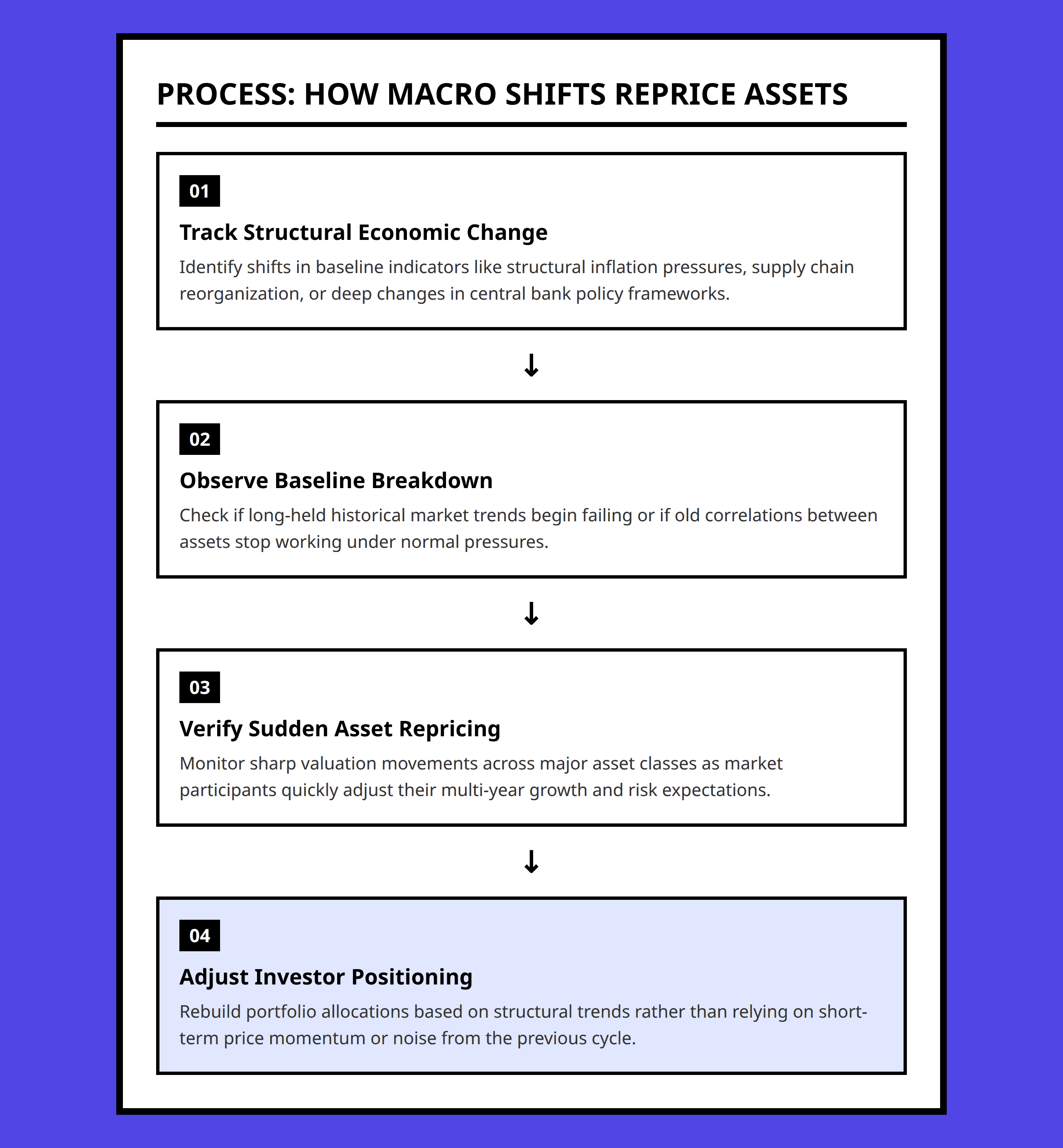
A useful way to view investing is through long periods of historical change rather than short-term market fluctuations.
One perspective sees human history as moving through major transitions that reshape how people live, produce wealth, and organize society. For thousands of years, economic life changed slowly. Most people lived close to subsistence levels, and growth was limited by available technology.
Then came large-scale shifts such as the agricultural revolution and later the industrial revolution. These were not ordinary events. They changed productivity, living standards, population growth, and wealth creation itself.
What stands out to me is that the largest economic opportunities appeared during these transitions. People who understood the direction of change were often positioned very differently from those who assumed existing conditions would continue indefinitely.
Why Most Investors Focus on the Wrong Time Horizon
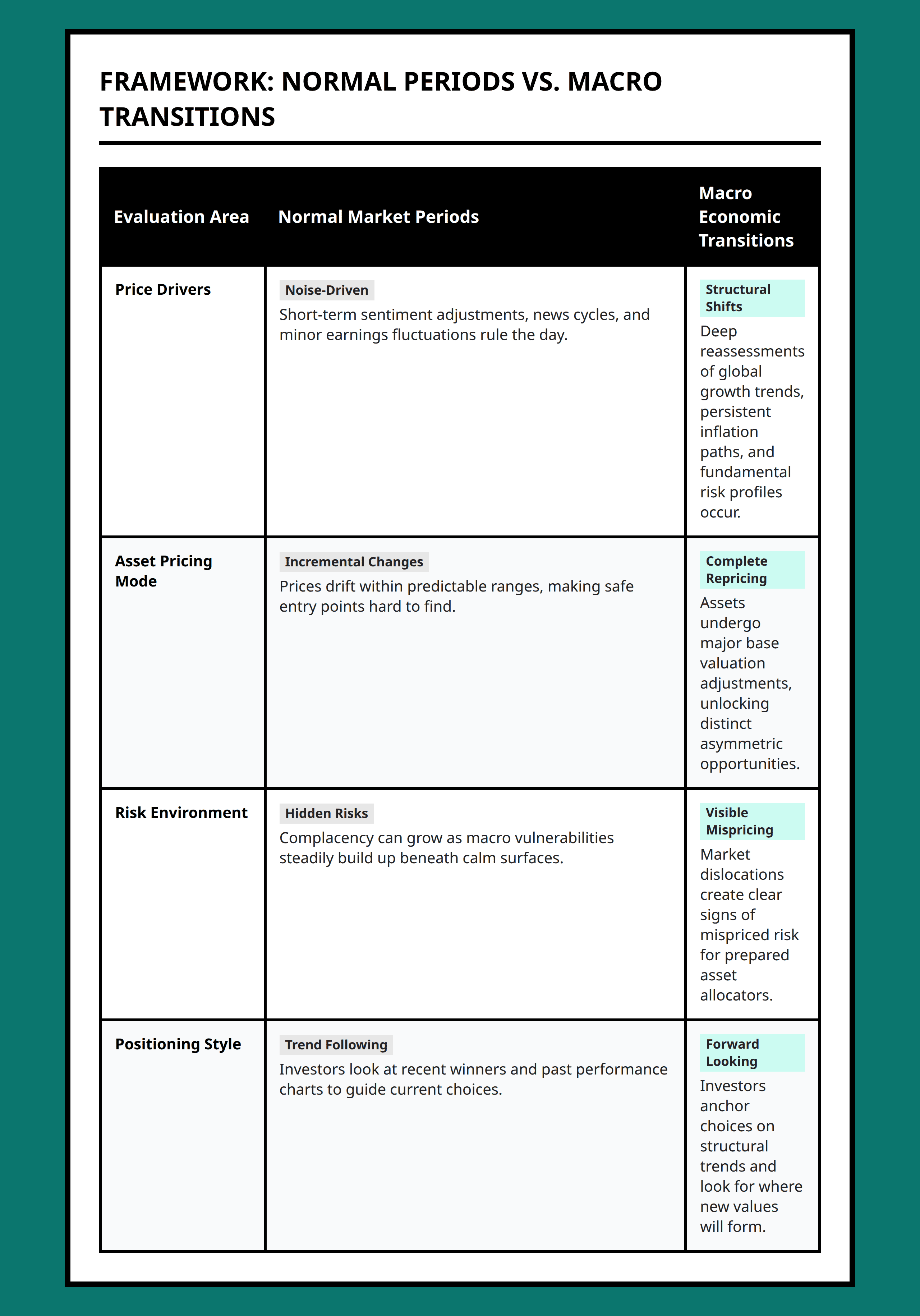
Markets encourage short-term thinking. Financial news reports daily price movements. Analysts discuss quarterly performance. Investors compare results month by month.
There is nothing inherently wrong with tracking current events. The problem appears when short-term information hides long-term structural change.
Imagine someone who checks a retirement account every week. They may notice a few percentage points of movement and react emotionally. Meanwhile, a decade-long shift in monetary policy, debt levels, or economic structure may be creating much larger opportunities and risks.
When I evaluate long-term opportunities, I try to separate temporary noise from genuine transition. Small market moves matter far less than changes capable of altering the investment landscape for years.
Asset Prices Change When Economic Assumptions Change
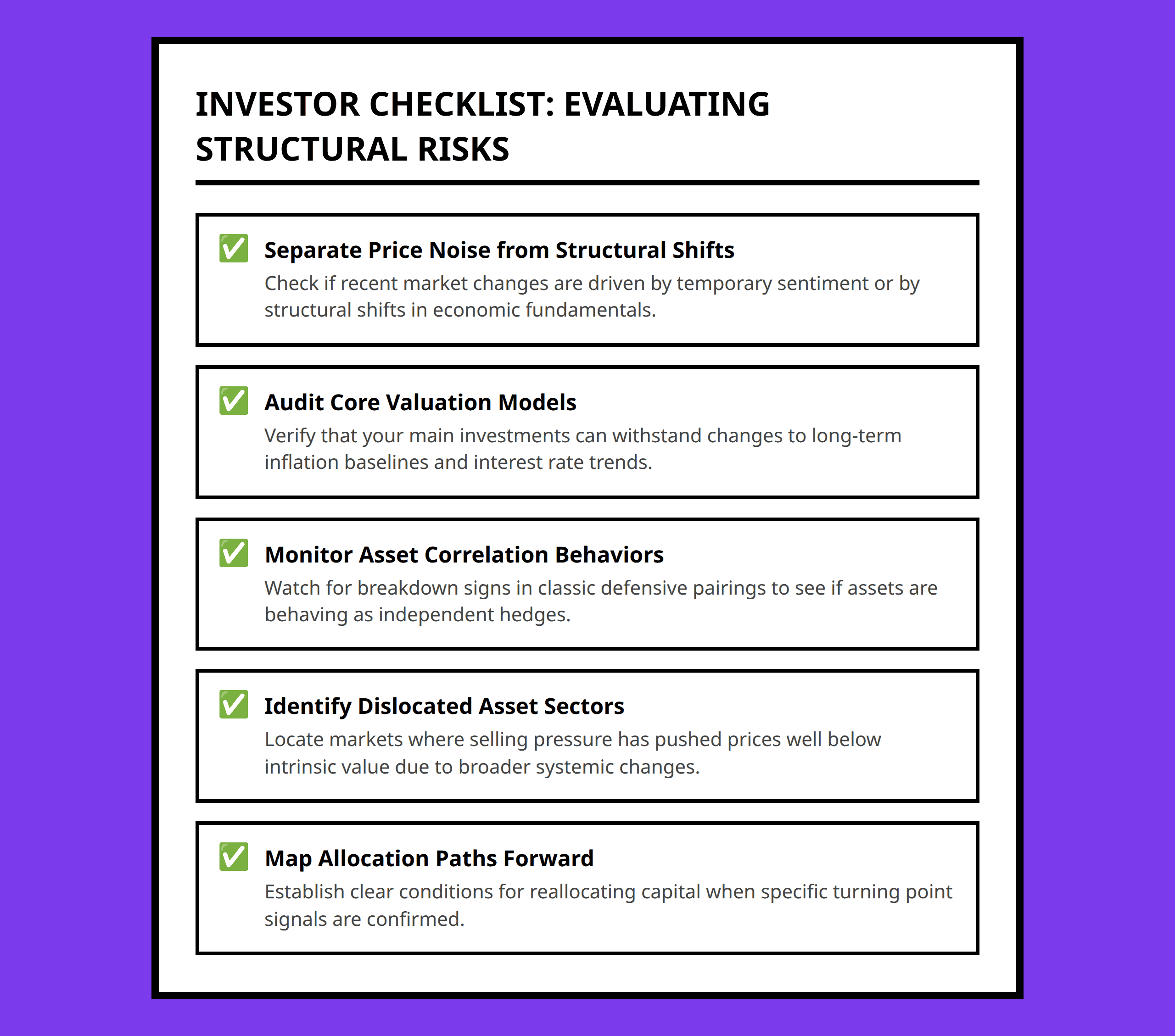
A major transition affects more than economic growth. It changes the assumptions investors use to value assets.
During stable periods, investors become comfortable with familiar patterns. Certain sectors receive premium valuations. Some assets are viewed as permanently safe. Others are ignored because they have performed poorly for years.
Then conditions shift.
A change in inflation expectations, debt burdens, currency confidence, or economic growth can force investors to reassess those assumptions. When that happens, capital begins moving from one set of assets to another.
This repricing process is where large opportunities emerge. An asset class that spent years out of favor may suddenly attract attention because the environment supporting its weakness no longer exists.
The opportunity often appears before the majority recognizes what is happening.
The Greatest Opportunities Usually Begin Unpopular
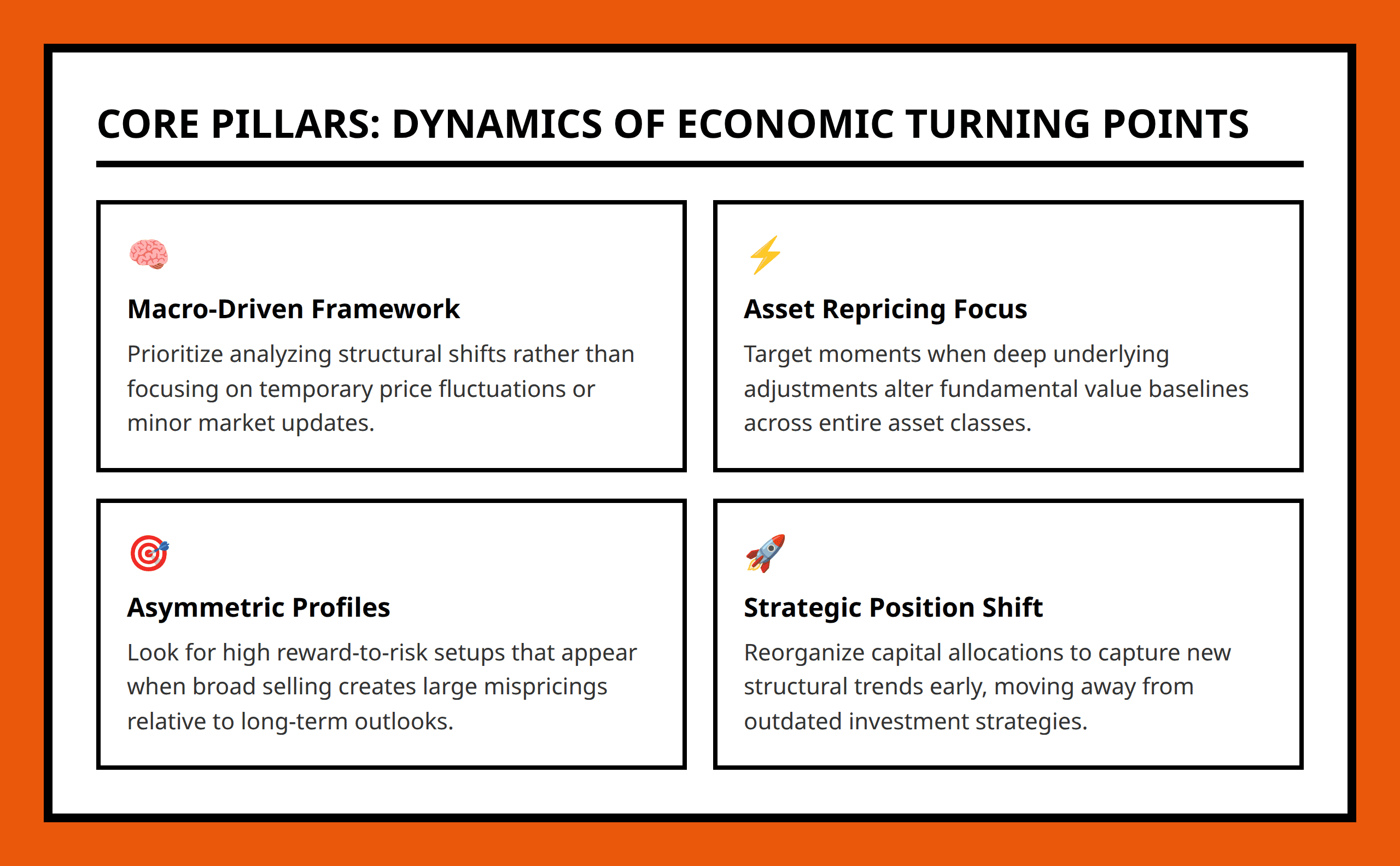
One pattern appears repeatedly during major transitions: the best opportunities rarely feel obvious at the beginning.
Investors naturally prefer assets that have recently performed well. That preference creates a tendency to extrapolate the recent past into the future.
Yet turning points work differently. They emerge when existing trends become exhausted and conditions begin moving in a new direction.
A practical example is easy to imagine. Suppose a particular asset class has spent more than a decade underperforming. Most investors ignore it because recent experience provides little reason for enthusiasm. If the underlying economic forces supporting that weakness begin changing, the opportunity may exist long before public enthusiasm returns.
By the time the opportunity becomes obvious, much of the gain may already have occurred.
The Importance of Positioning Before the Crowd
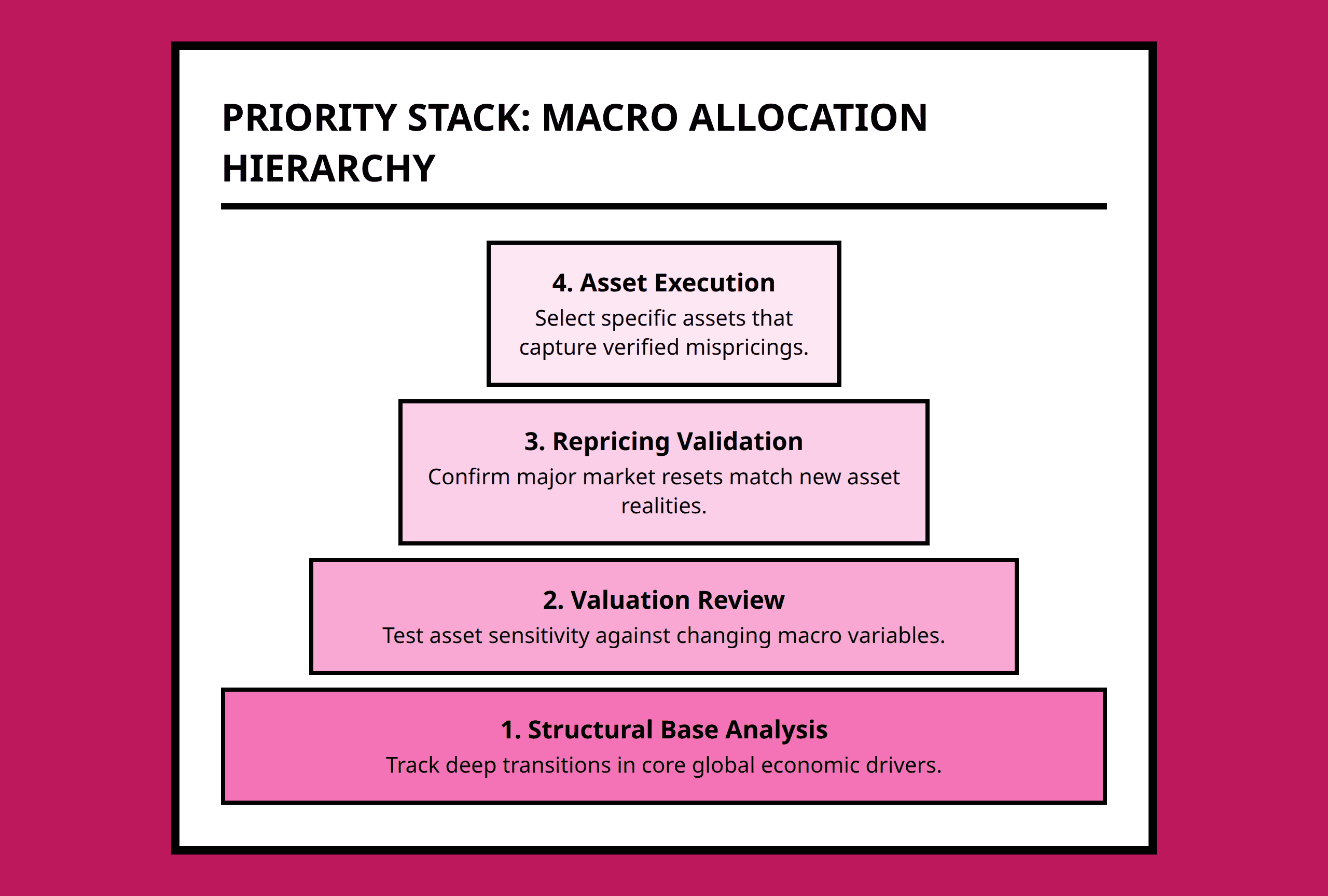
The challenge with economic transitions is timing.
No investor can know the exact moment a major shift will become visible to everyone else. Waiting for complete confirmation often means paying significantly higher prices.
This does not mean making reckless predictions. It means paying attention to broad economic conditions and recognizing when old assumptions appear increasingly fragile.
I find it useful to think in terms of preparation rather than prediction. Preparation accepts uncertainty while still acknowledging that important changes may be underway.
An investor who understands transition dynamics does not need perfect foresight. They only need to recognize that future conditions may differ substantially from the recent past.
Why Transition Thinking Changes Portfolio Decisions

Once economic change becomes the focus, portfolio decisions begin to look different.
The question shifts from identifying next quarter’s winners to understanding which assets could benefit from a changing economic environment.
This perspective encourages investors to look beyond conventional categories and consider how various assets might perform if long-established trends reverse.
More importantly, it encourages humility. Economic transitions are powerful because they expose assumptions that once seemed permanent. Investors who remain flexible often have a better chance of adapting than those who become attached to a single narrative.
The lesson I carry forward is simple: the largest investment opportunities rarely emerge from normal conditions. They emerge when economic reality changes faster than investor expectations. Recognizing that possibility may be one of the most valuable skills a long-term investor can develop.
- Economic Transition: A long-term shift in how an economy functions, grows, or allocates resources.
- Asset Repricing: A change in how investors value an asset because underlying economic conditions have changed.
- Macro Investing: An investment approach that focuses on broad economic trends rather than individual company details.
- Capital Flow: The movement of money between different investments, sectors, countries, or asset classes.
- Structural Change: A deep economic shift that affects long-term trends rather than short-term market fluctuations.
References:
- https://privatebank.jpmorgan.com/nam/en/insights
- https://www.investopedia.com/terms/r/riskrewardratio.asp
- https://www.sciencedirect.com/science/article/pii/S0261560625001883
- https://sg.finance.yahoo.com/news/risk-vs-reward-investing-beginner-233000864.html
- https://www.sec.gov/investor/pubs/tenthingstoconsider.htm
- https://www.standardbank.co.za/southafrica/personal/learn/understanding-investment-risk-vs-reward
- https://www.forbes.com/sites/catherinebrock/2025/08/22/understanding-risk-vs-reward-what-every-new-investor-should-know/
- https://www.alliancebernstein.com/at/en-gb/institutions/insights/investment-insights/turning-point-2022-redefines-the-investing-calculus.html
- https://www.linkedin.com/top-content/business-strategy/balancing-key-factors/how-to-balance-risk-and-reward/
- https://www.reddit.com/r/investingforbeginners/comments/1tdxb2n/what_are_some_high_riskhigh_reward_investments/
