Even with complete information, investors often make predictable mistakes due to systematic cognitive biases. Recognizing these biases—overconfidence, confirmation bias, conservatism, and the effects highlighted by prospect theory—can help you understand why rational analysis alone often fails.
Many investors assume that more information equals better decisions. But what I have noticed is that how we process information is just as important as the information itself. Systematic biases influence interpretation, judgment, and action, often in subtle ways that can dramatically affect outcomes.
Behavioral finance identifies patterns where human psychology interferes with rational market behavior. Understanding these patterns allows investors to anticipate their own errors and take steps to mitigate their impact.
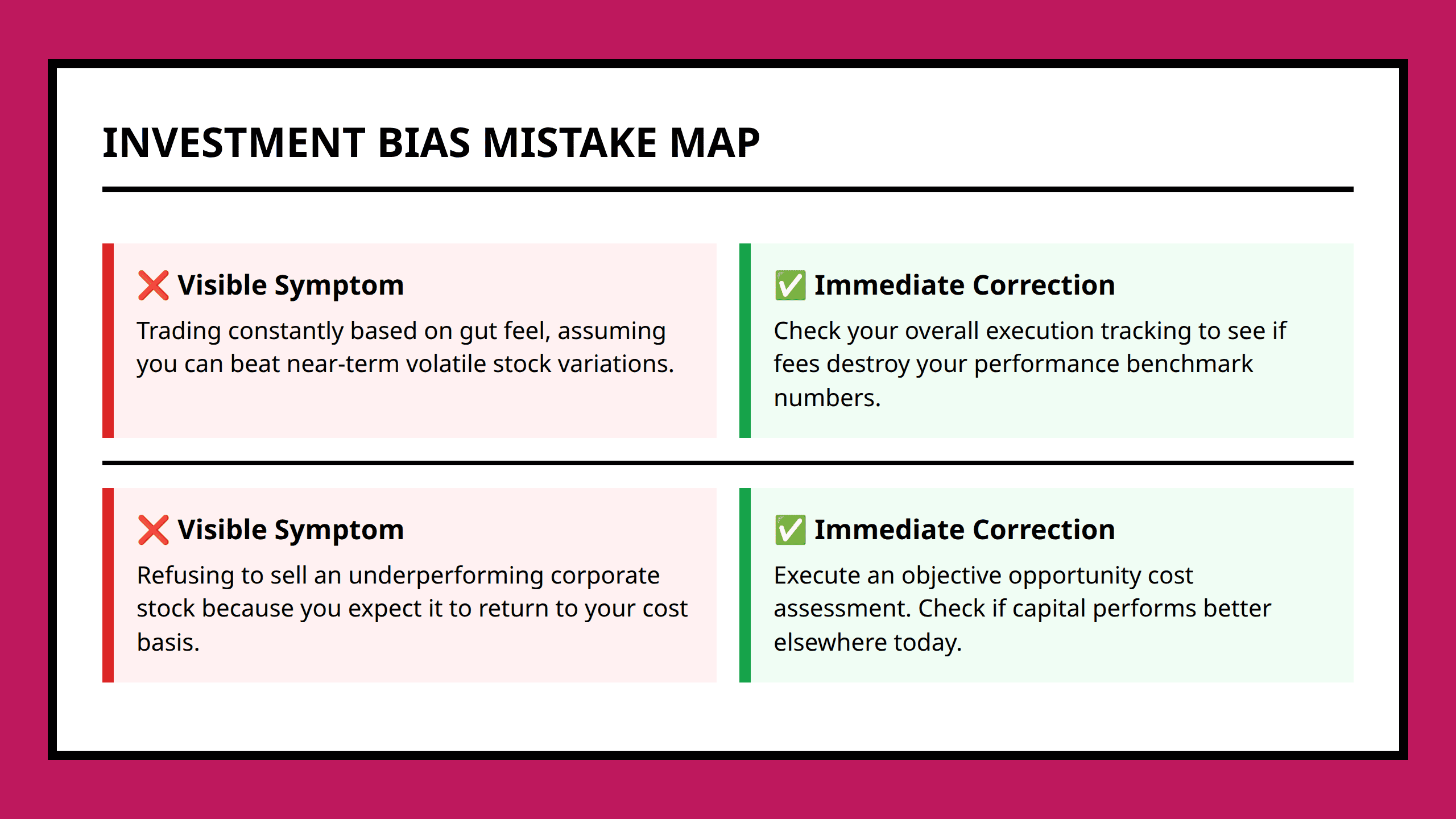
Takeaways
- Overconfidence leads investors to overestimate their knowledge or predictive ability, increasing risk exposure.
- Confirmation bias makes people focus on information that supports their existing beliefs and ignore contradictory evidence.
- Conservatism bias results in under-reacting to new information, delaying necessary adjustments in investment decisions.
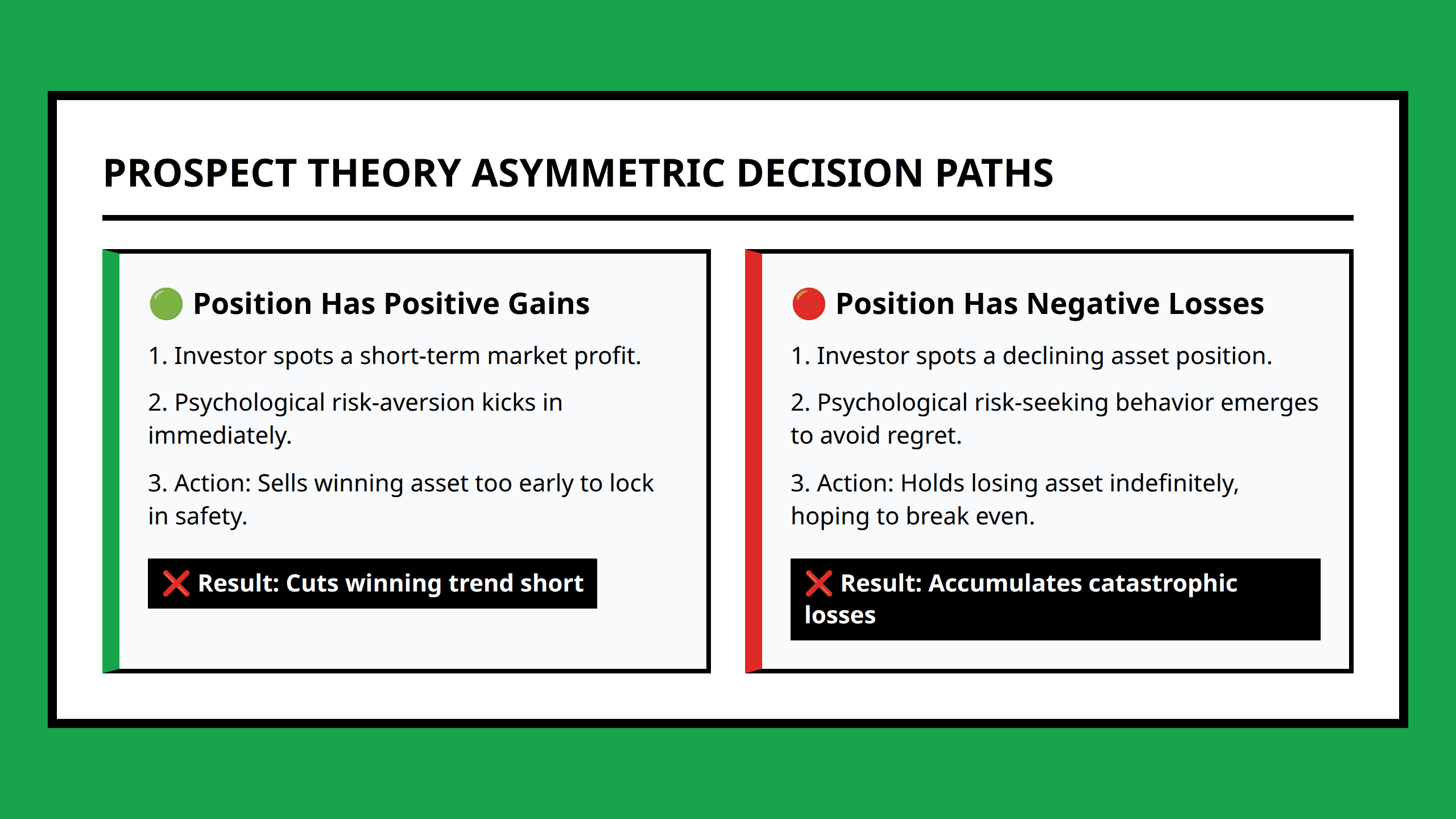
- Prospect theory explains why losses often feel more significant than gains of the same size, influencing risk-taking behavior.
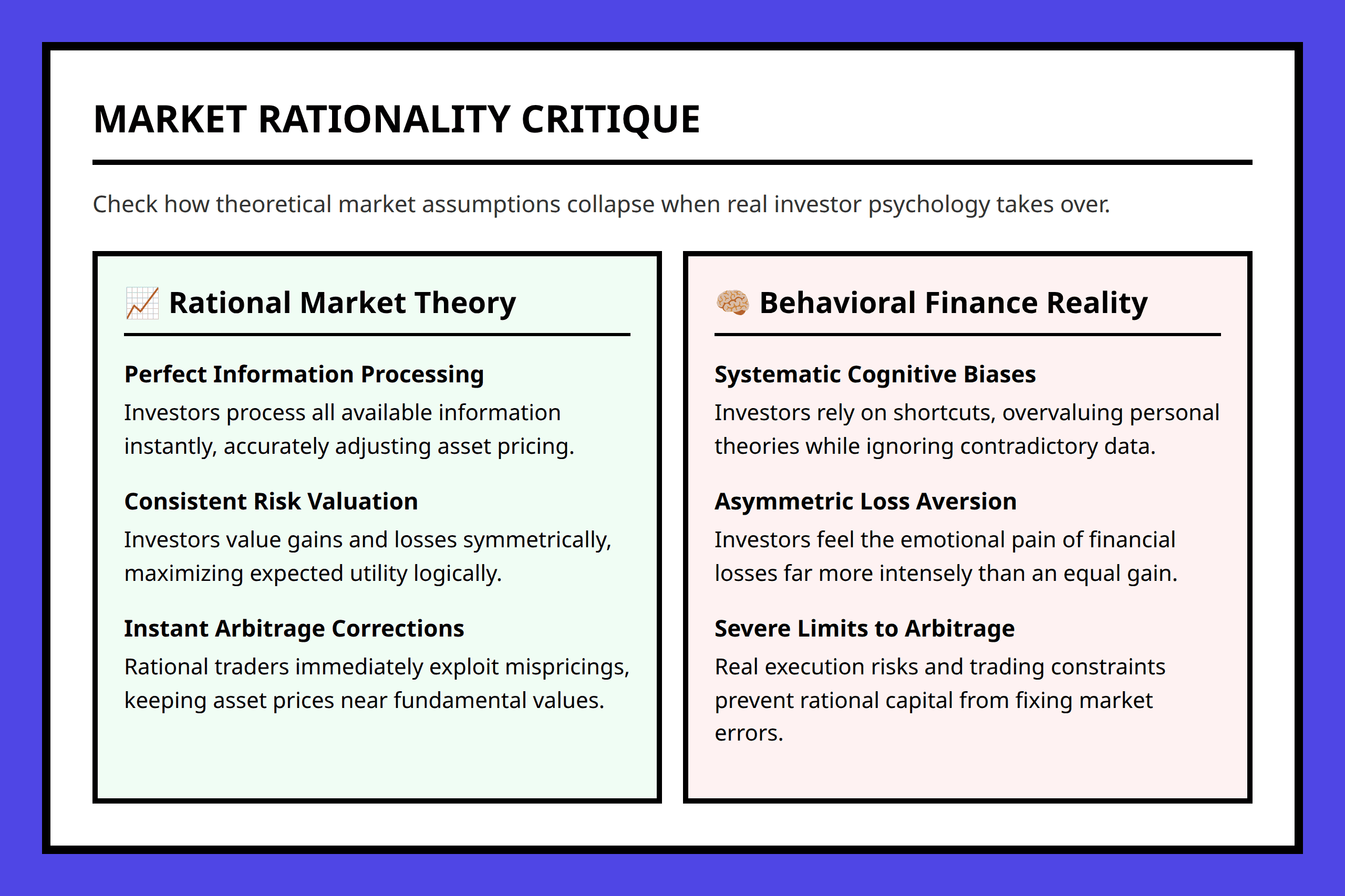
- Limits to arbitrage mean that even if mispricing exists, it may not be corrected efficiently due to structural or practical constraints. fileciteturn0file0turn1file1
Overconfidence: The Bias That Inflates Risk
Overconfidence can manifest in several ways: overestimating your ability to pick winning investments, underestimating the likelihood of negative events, or believing that your timing decisions will consistently outperform the market. I often notice that investors who exhibit overconfidence take larger positions or ignore diversification, assuming they have special insight. Recognizing this bias is critical because it can systematically amplify portfolio risk. fileciteturn0file0turn1file1
Confirmation Bias: Seeing Only What Fits Your Story
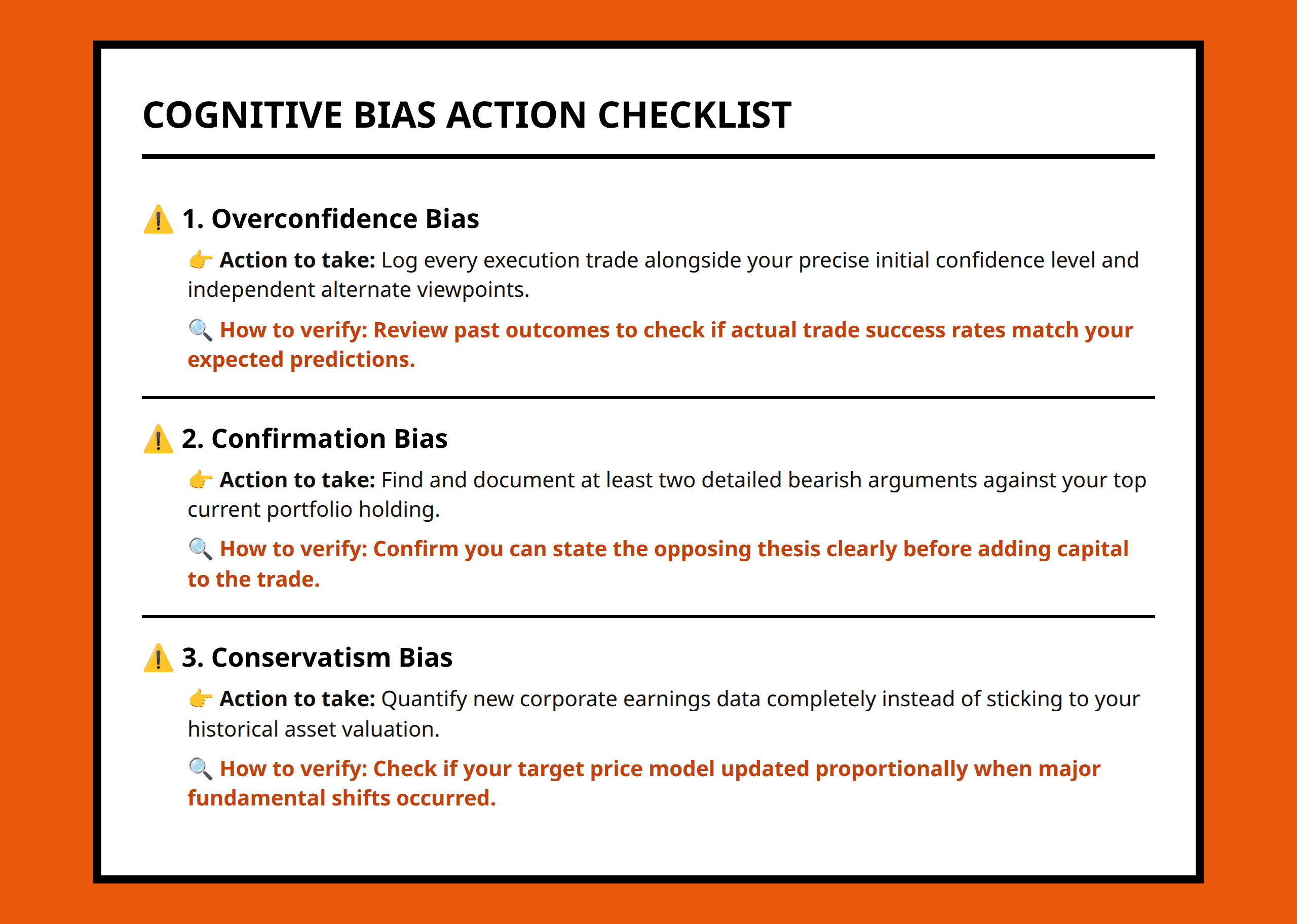
Confirmation bias leads investors to seek out information that supports their existing views while discounting contradictory data. For example, if I favor a particular stock, I might notice only positive news and downplay warnings or critical reports. This selective attention can prevent timely course corrections and create a skewed perception of reality, making otherwise rational decisions flawed. fileciteturn0file0turn1file1
Conservatism Bias: Sticking Too Long to Old Beliefs
Conservatism bias results in under-reacting to new information. Investors may adjust their beliefs too slowly when circumstances change. I find that this often causes hesitation in rebalancing portfolios or reacting to market shifts. The problem is subtle because it doesn’t produce obvious errors immediately, but over time it can erode returns and increase exposure to evolving risks. fileciteturn0file0turn1file1
Prospect Theory: Why Losses Hurt More Than Gains Feel Good
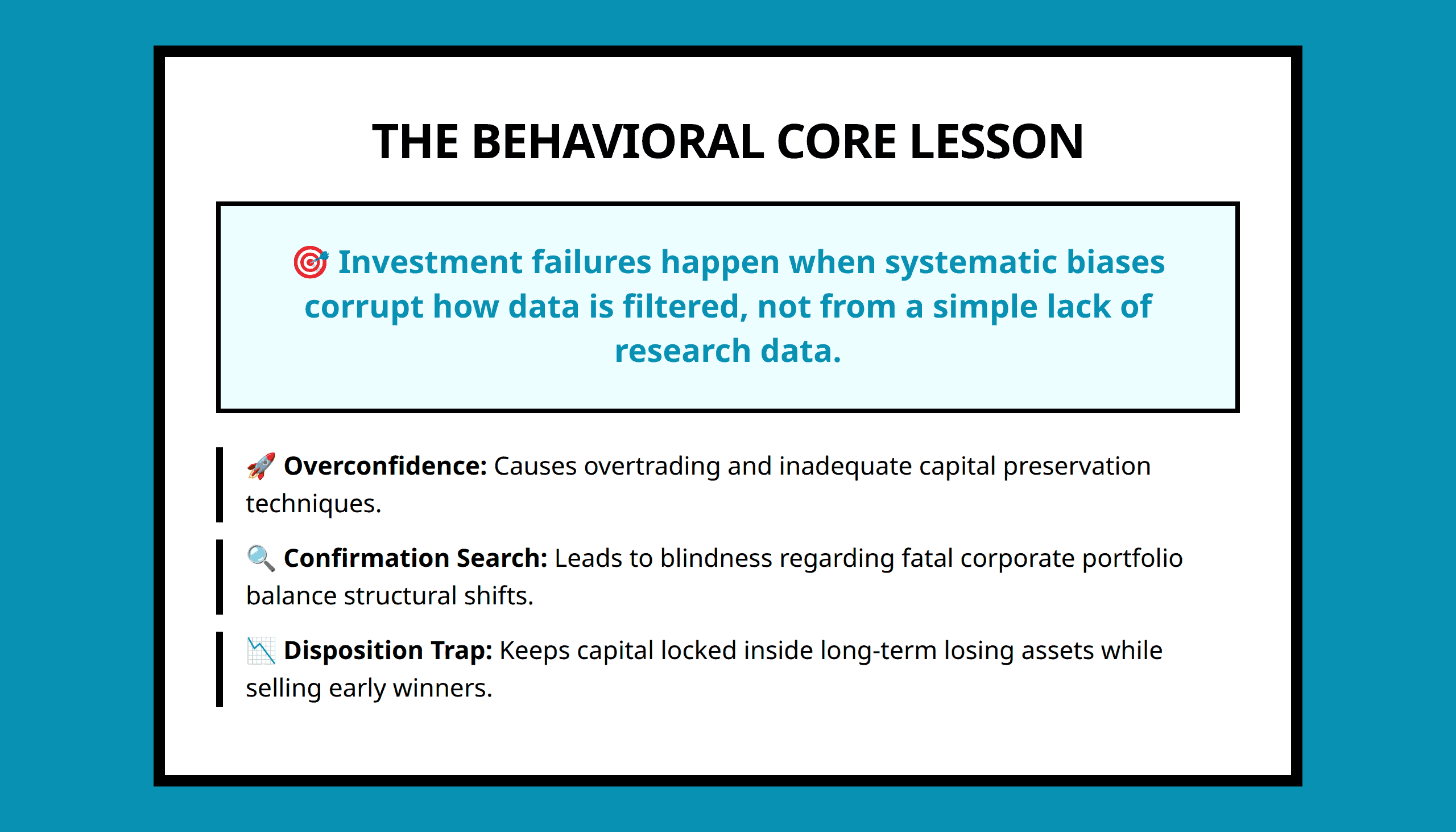
Prospect theory explains that people weight losses more heavily than equivalent gains. I see this affect behavior when investors hold losing positions too long to avoid realizing losses or take excessive risks to recoup them. Understanding this psychological weighting helps explain why portfolios often deviate from theoretically rational choices. fileciteturn0file0turn1file1
Limits to Arbitrage: When Market Correction Isn’t Immediate
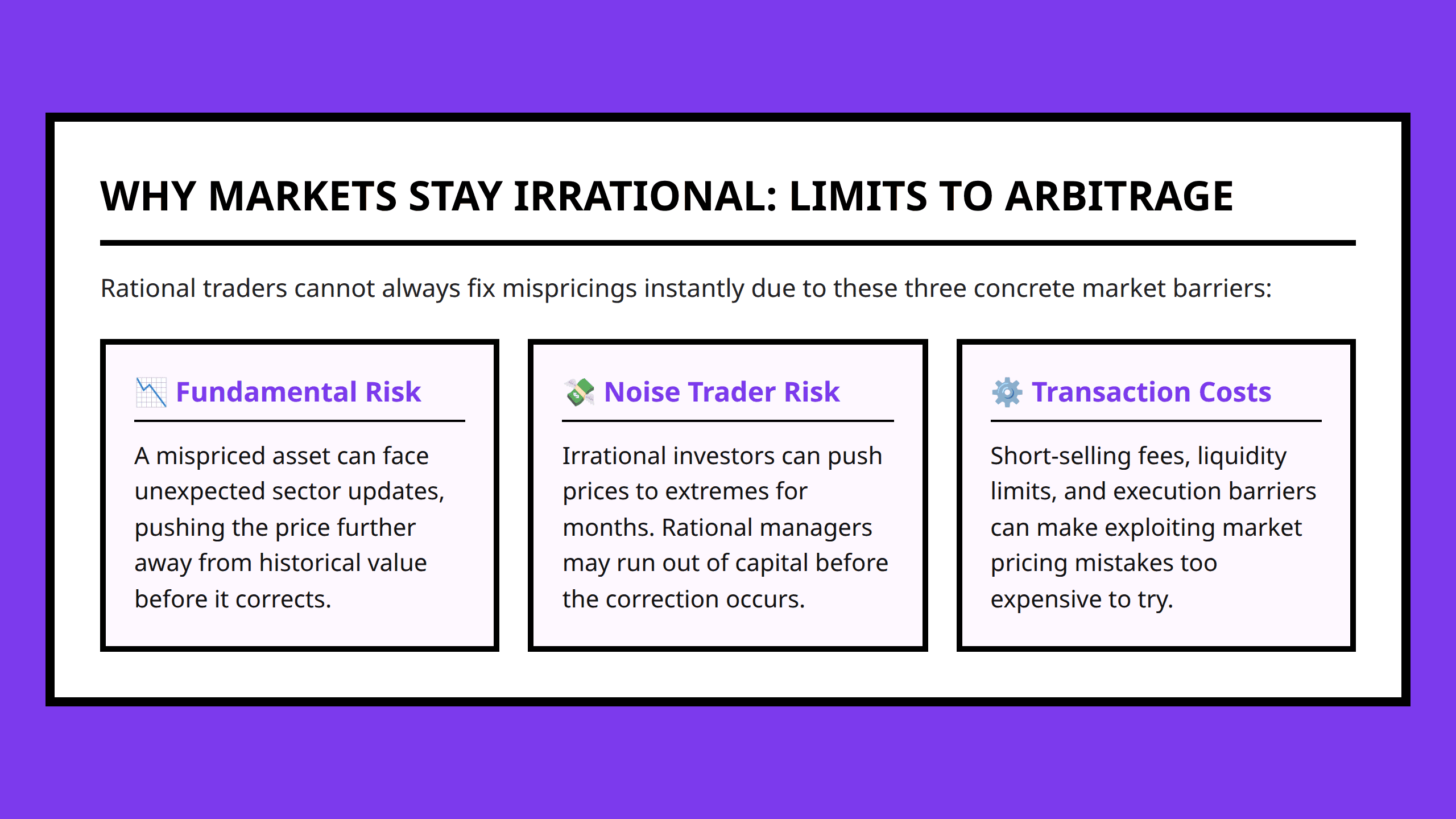
Even if mispricing exists, structural limits prevent immediate correction. These limits can be regulatory, capital-related, or practical, affecting the ability to act on perceived errors. I have observed that acknowledging these constraints helps temper expectations and encourages more realistic strategies for responding to perceived opportunities. fileciteturn0file0turn1file1
- Behavioral Finance: A field studying how psychological factors affect financial decision-making.
- Overconfidence Bias: Overestimating your knowledge or ability to predict outcomes.
- Confirmation Bias: Focusing on information that supports existing beliefs while ignoring contradictory data.
- Conservatism Bias: Under-reacting to new information and sticking to previous judgments.
- Prospect Theory: A theory describing how people perceive gains and losses asymmetrically.
- Limits to Arbitrage: Constraints that prevent investors from correcting mispricing immediately in the market.
References:
- https://www.preprints.org/frontend/manuscript/5870d7ea864b73007a7c88f0bfbd5079/download_pub
- https://online.mason.wm.edu/blog/behavioral-biases-that-can-impact-investing-decisions
- https://www.investopedia.com/terms/b/behavioralfinance.asp
- https://www.sciencedirect.com/science/article/pii/S000169182400180X
- https://analystprep.com/cfa-level-1-exam/portfolio-management/behavioral-bias-and-financial-decision-making/
- https://www.tandfonline.com/doi/full/10.1080/23322039.2025.2567499
- https://www.ubs.com/us/en/wealth-management/our-solutions/planning/wealth-planning/articles/behavioral-biases-impact-investment-decisions.html
- https://omniawealth.com/behavioral-biases-investors-decisions/
- https://www.researchgate.net/publication/388992324_Impact_of_Behavioral_Biases_on_Investment_Decisions
