Understanding a company’s financial statements goes beyond knowing accounting terms—it’s about evaluating profitability, capital efficiency, and risk to make informed investment decisions.
Many investors stop at surface-level numbers or accounting jargon, but I find that digging deeper into financial statements reveals how a company really performs. By connecting balance sheets, income statements, and cash flow statements to real business outcomes, you gain insights into efficiency, risk, and growth potential.
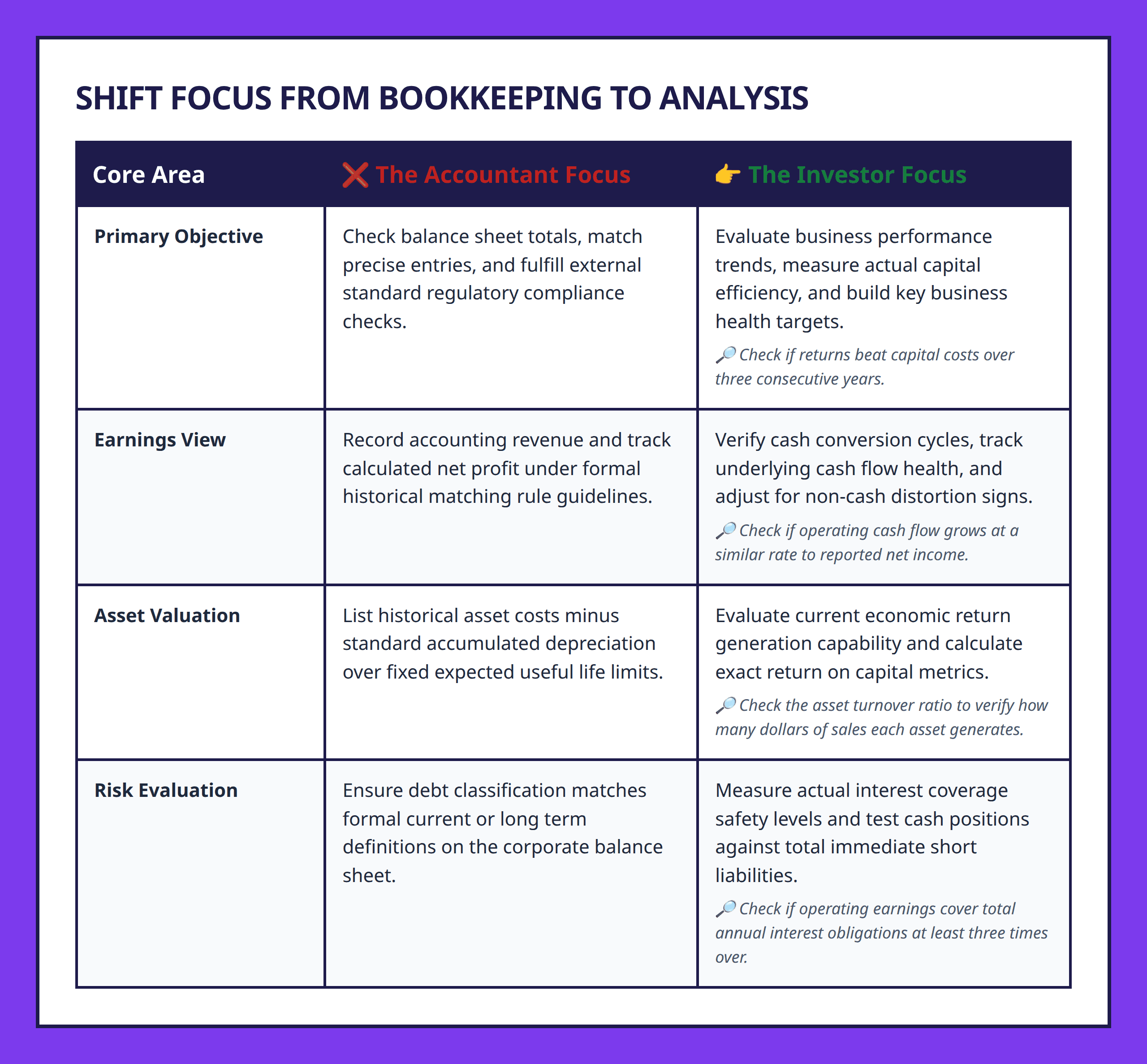
Rather than seeing statements as accounting outputs, I focus on what they say about cash generation, leverage, and operational performance. This shift in perspective is what separates casual readers from investors making actionable decisions.
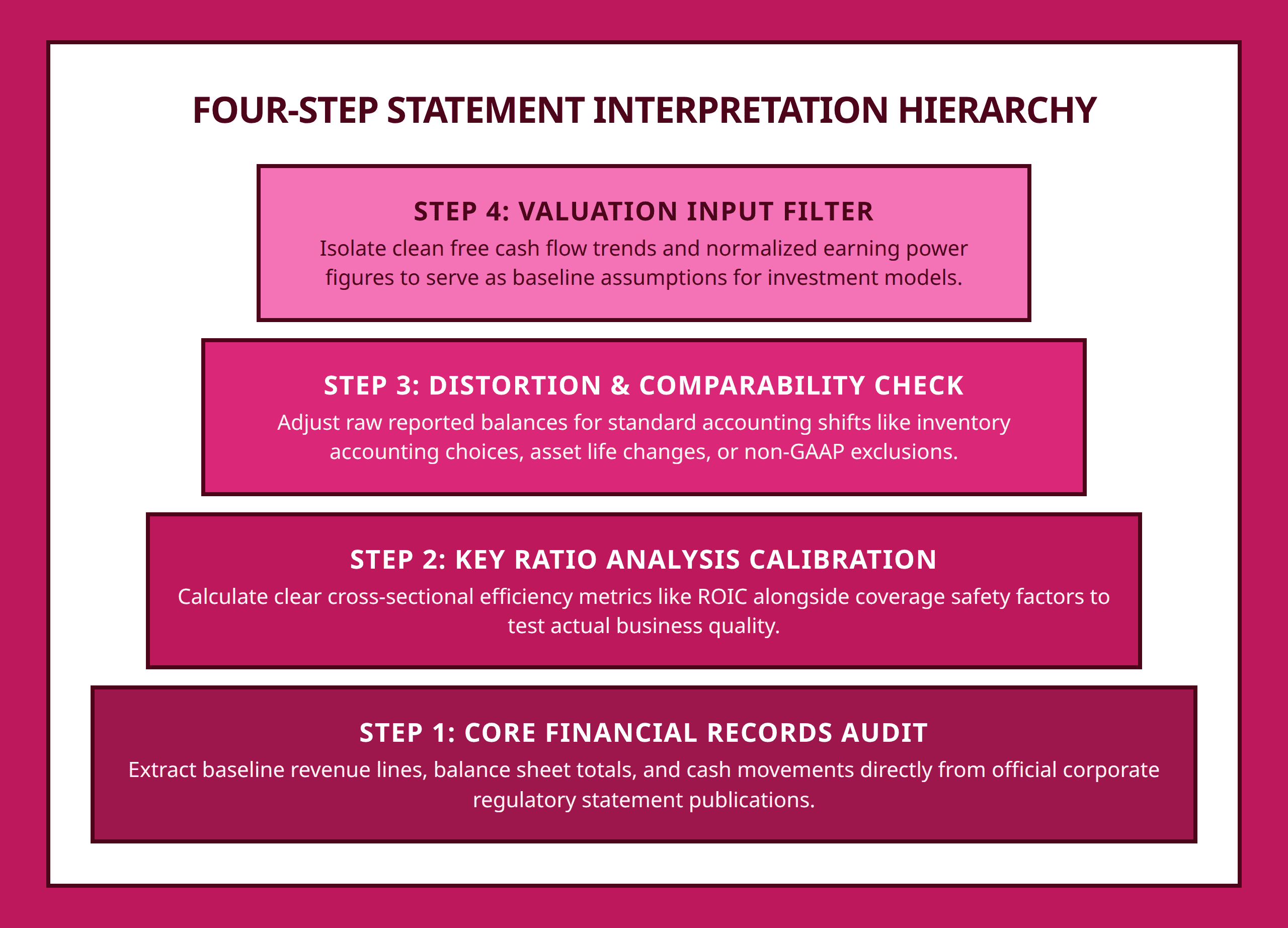
Takeaways
- Financial statements reveal profitability, efficiency, leverage, and liquidity beyond raw numbers.
- Ratio analysis provides a structured way to evaluate company performance and comparability.
- Be aware of accounting distortions or differences in reporting standards that may affect comparability.
- Use statements to inform investment decisions rather than just understand the accounting.
Core Financial Statements Investors Should Examine
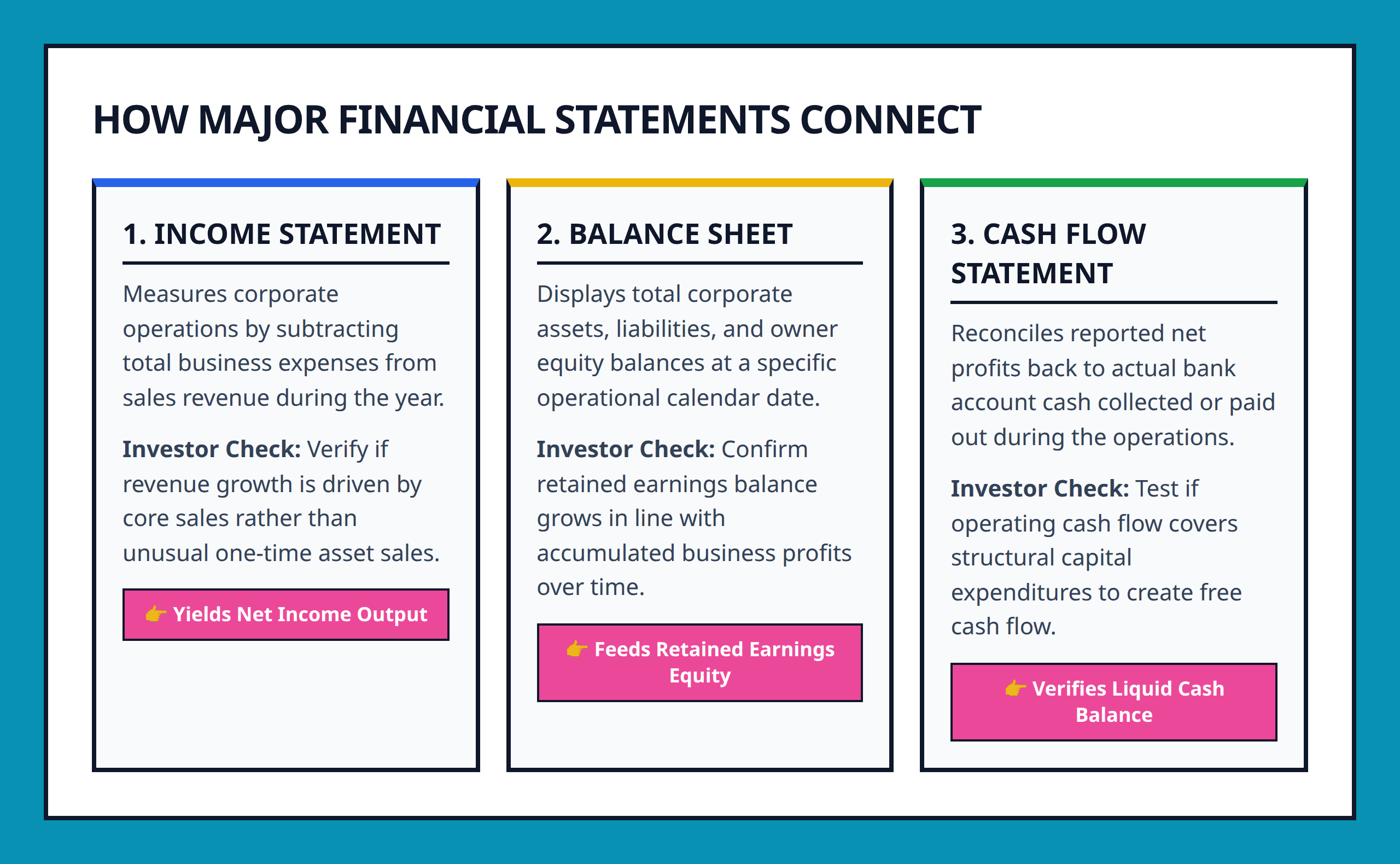
The three core statements—income statement, balance sheet, and cash flow statement—each provide unique insights. Income statements show profitability and growth trends, balance sheets reveal capital structure and solvency, and cash flow statements indicate how effectively a company converts operations into cash. I look for patterns across these statements to confirm that profits are supported by cash flows and that leverage is sustainable.
Measuring Performance With Ratios
Ratios allow me to interpret financial data in a comparable way. Profitability ratios, like return on equity or profit margin, reveal how efficiently a company turns resources into earnings. Liquidity ratios, such as current and quick ratios, show whether short-term obligations can be met. Leverage ratios help me gauge risk from debt levels. Evaluating these ratios over time and against industry benchmarks highlights strengths and vulnerabilities that raw numbers might obscure.

Interpreting Accounting Choices and Comparability

One challenge I pay attention to is accounting differences. Two companies might use different depreciation methods or inventory valuation techniques, which can distort direct comparisons. I always ask: does this difference change the economic story, or is it a technical artifact? Understanding these subtleties helps me avoid being misled by figures that look impressive on paper but are not reflective of operational reality.
Practical Application for Investment Decisions

By combining statement analysis, ratio assessment, and accounting context, I form a picture of how a company actually operates. This informs whether it can sustain profits, manage debt, and convert earnings into cash. Statements become actionable tools rather than just records—helping to prioritize investment choices, anticipate risks, and identify companies that efficiently create value.
- Income Statement: Shows a company’s revenues, expenses, and profits over a period, reflecting operational performance.
- Balance Sheet: Provides a snapshot of assets, liabilities, and equity, indicating financial position and leverage.
- Cash Flow Statement: Details cash inflows and outflows from operations, investing, and financing, showing liquidity and cash generation.
- Profitability Ratios: Metrics such as return on equity and profit margin that measure how effectively a company generates profit.
- Liquidity Ratios: Measures like current ratio or quick ratio that show the company’s ability to meet short-term obligations.
- Leverage Ratios: Indicators such as debt-to-equity that assess financial risk and capital structure.
References:
- https://www.youtube.com/watch?v=fb7YCVR5fIU
- https://www.youtube.com/watch?v=9Jp5Bx0D8u0
- https://www.youtube.com/watch?v=vIameomgKMQ
- https://www.reddit.com/r/investing/comments/1mx18iy/whats_the_easiest_way_to_read_a_companys/
- https://www.reddit.com/r/investing/comments/1mx18iy/whats_the_easiest_way_to_read_a_companys/na1lj9o/
- https://www.reddit.com/r/investing/comments/1mx18iy/whats_the_easiest_way_to_read_a_companys/na5613s/
- https://www.reddit.com/r/InvestmentEducation/comments/1okzn4w/how_did_you_actually_learn_to_read_financial/
- https://www.linkedin.com/posts/tufailrehman_heres-how-to-read-your-financial-statements-activity-7320468188175958018-gNnZ
- https://www.investopedia.com/terms/f/financial-statements.asp
- https://www.pwc.com/jm/en/research-publications/pdf/basic-understanding-of-a-companys-financials.pdf
- https://www.sec.gov/about/reports-publications/investorpubsbegfinstmtguide
- https://www.trading212.com/learn/investing-101/how-to-read-financial-statements
- https://online.hbs.edu/blog/post/how-to-read-financial-statements
- https://www.reddit.com/r/ValueInvesting/comments/1f6ba56/best_way_to_understand_financial_statements_for/
- https://www.reddit.com/r/ValueInvesting/comments/1f6ba56/best_way_to_understand_financial_statements_for/lkyz356/
- https://www.reddit.com/r/investing/comments/b7rrwo/what_are_the_key_things_to_look_for_when_reading/
- https://www.schwab.com/learn/story/3-financial-statements-to-measure-companys-strength
- https://www.reddit.com/r/investing/comments/1mx18iy/whats_the_easiest_way_to_read_a_companys/na5zgp5/
