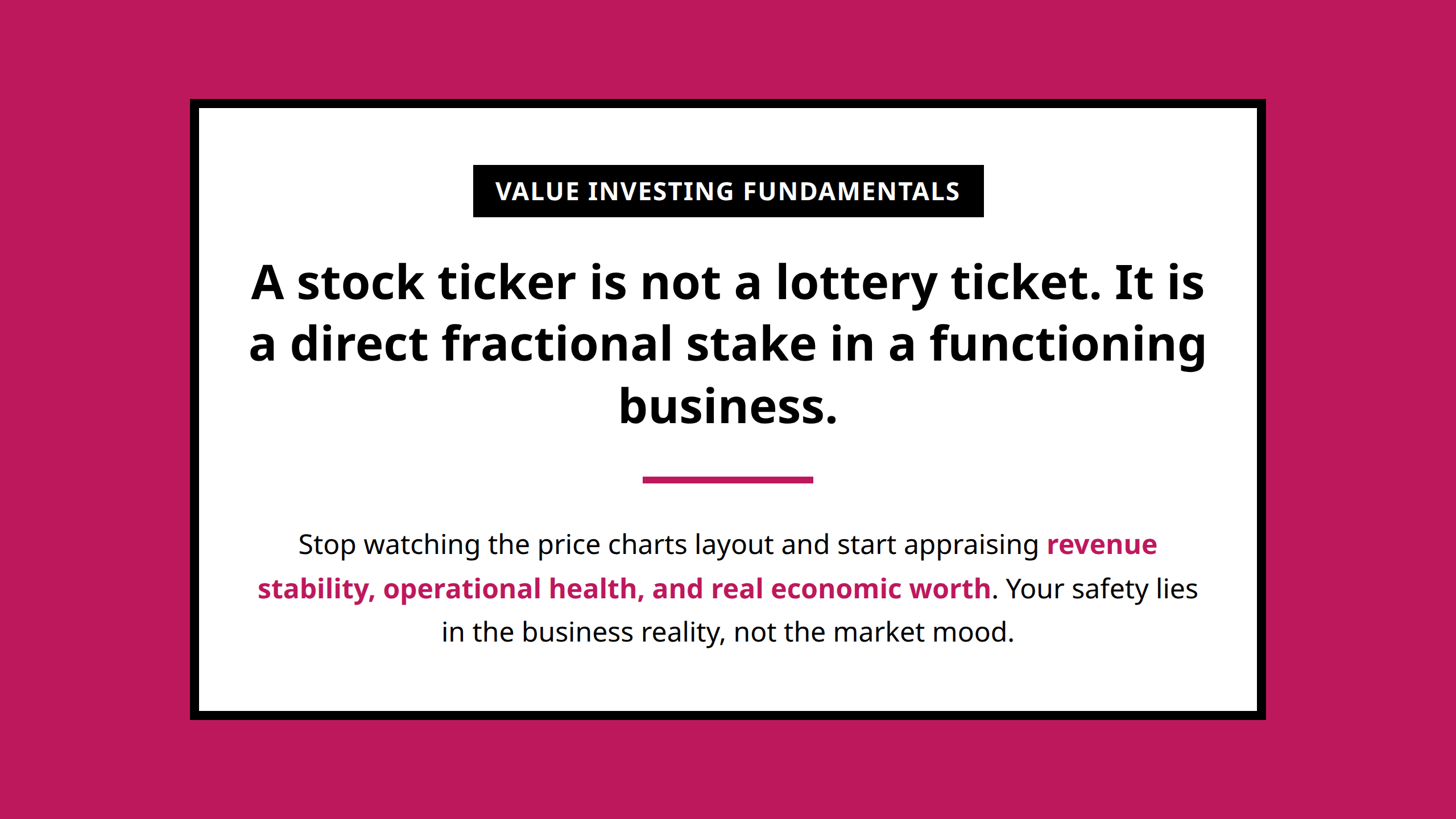
Value investing means treating every stock as a real business purchase and making decisions based on its true economic worth, not market noise. It shifts your focus from short-term price movements to long-term business fundamentals like earnings power, assets, and stability.
Most people enter the stock market thinking about price charts, daily movements, or “hot” companies everyone is talking about. It feels active, fast, and exciting—but it often misses the real point of investing entirely.
What often gets overlooked is something far simpler and more powerful: when you buy a stock, you are buying a piece of a business. Once that idea clicks, everything about investing changes. The goal is no longer to predict short-term market behavior, but to understand real business value.
Takeaways
- Every stock represents ownership in a real business, not just a trading symbol.
- Investment success depends on understanding intrinsic value, not market movement.
- Good investing is a disciplined process of business appraisal, not speculation.
- Long-term thinking helps reduce emotional decisions driven by market volatility.
What Value Investing Really Means in Practice
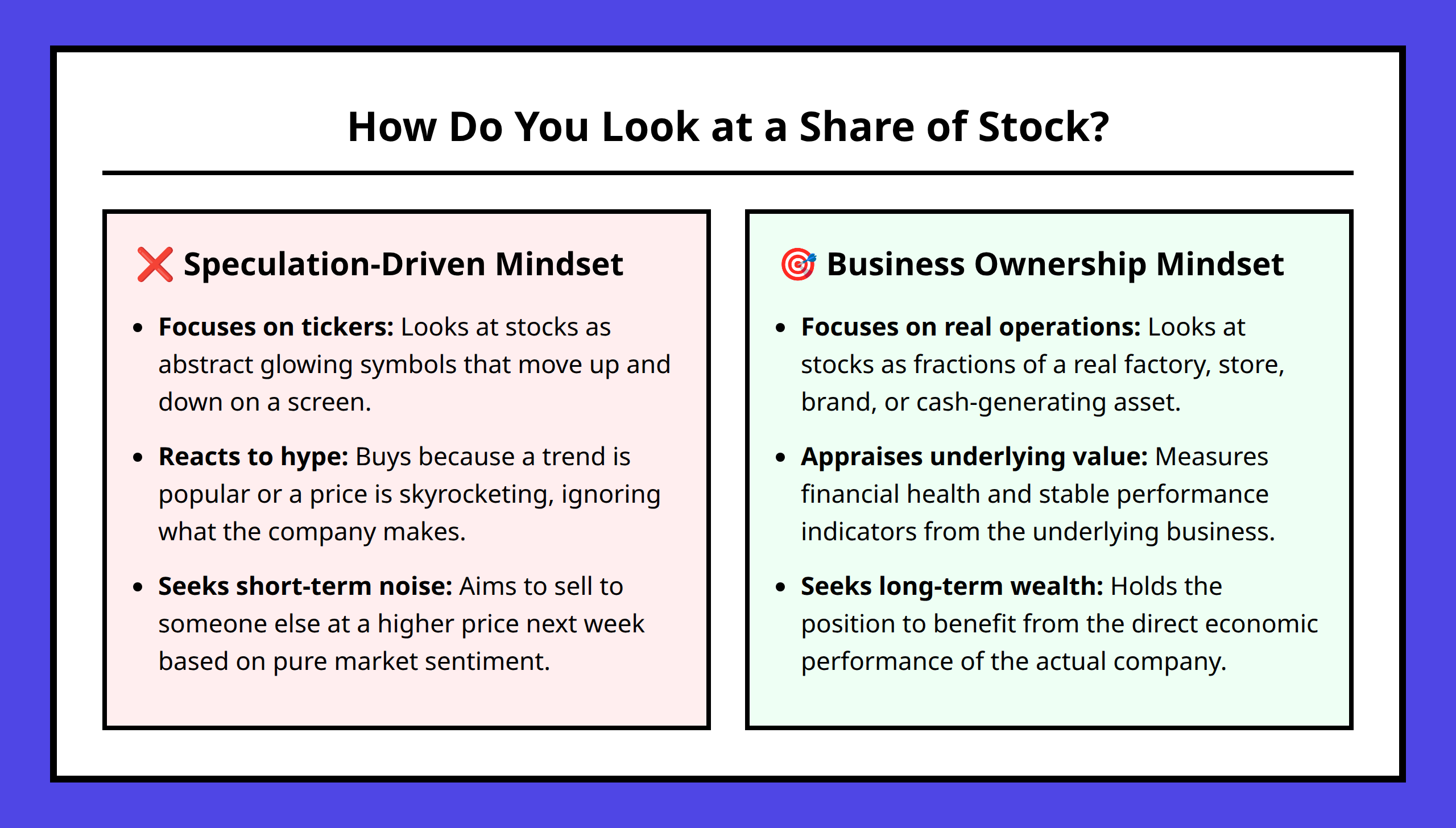
At its core, value investing is about ownership thinking. When you buy shares, you are not just buying a price that moves up and down—you are buying a slice of a functioning business with real assets, real employees, and real profits.
This is why value investors focus heavily on intrinsic value. Intrinsic value represents what a business is actually worth based on its ability to generate earnings over time. It is not determined by market sentiment or daily trading behavior, but by the business itself.
A simple way to understand this is to imagine buying a small local shop. You wouldn’t ask, “What is the stock market saying about this shop today?” Instead, you would ask questions like:
- How much money does it make?
- Is it growing or shrinking?
- Does it have loyal customers?
- What would it earn in the future?
Value investing applies the same logic to publicly traded companies. Whether it is a small retailer or a large global brand, the thinking process is the same: what is the business worth, and is the current price reasonable compared to that value?
This mindset also explains why value investors often emphasize patience. A business does not change its true value every second, even if its stock price does. The underlying idea is stability in value versus instability in price.
The Core Principles Behind Value-Based Decision Making
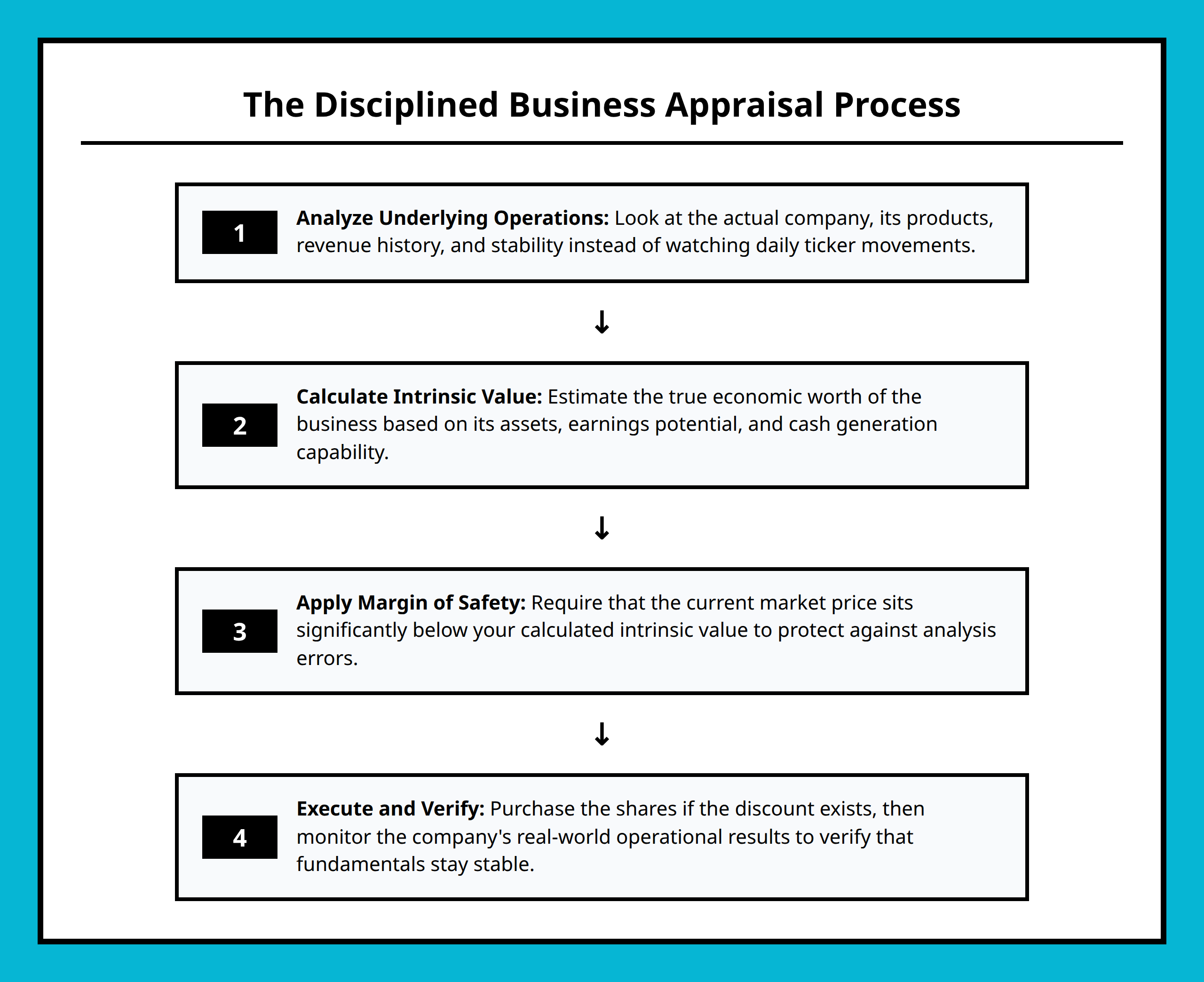
Value investing is not just a definition—it is a disciplined process. It requires structure, patience, and a consistent way of evaluating businesses.
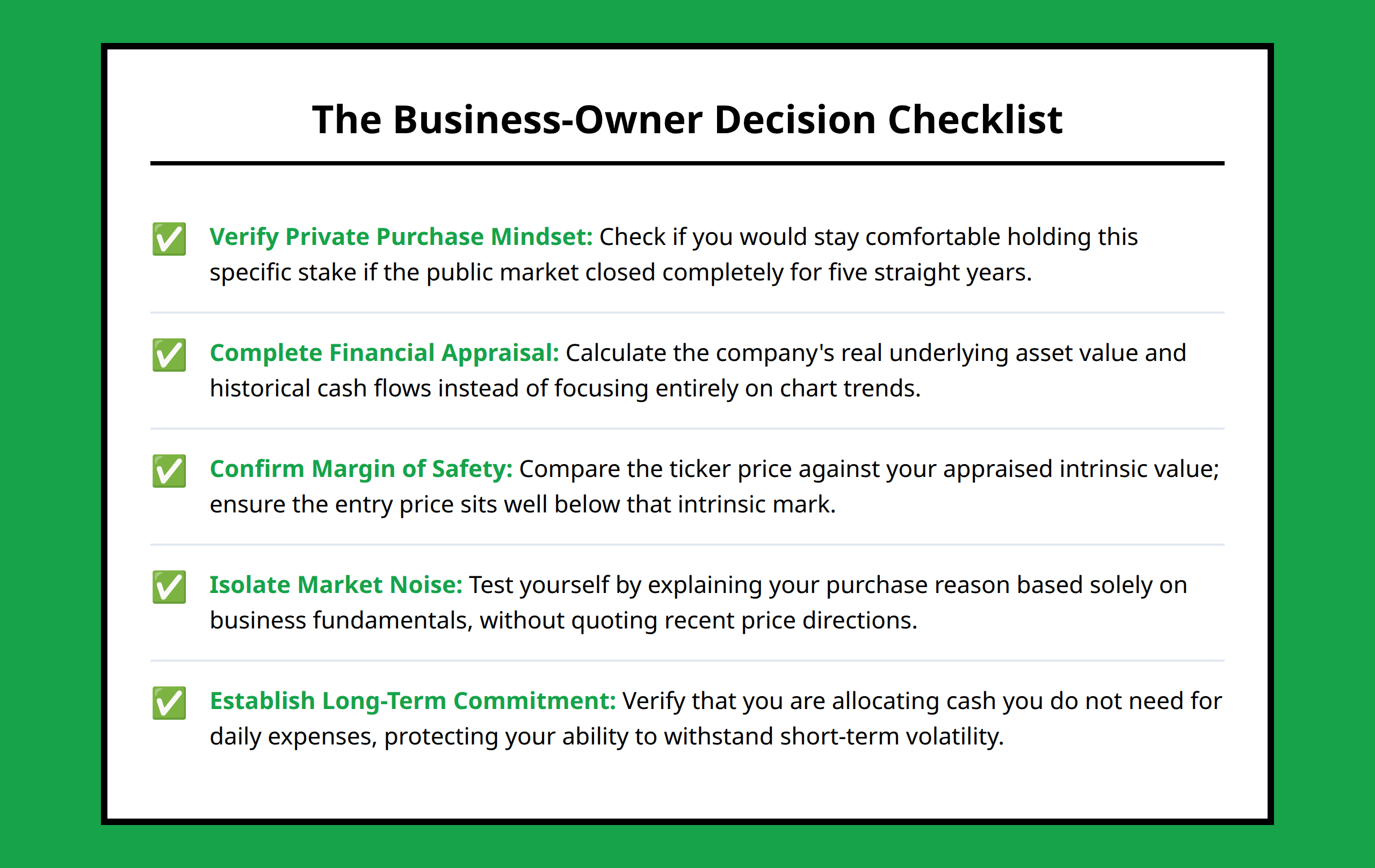
The first principle is conscious appraisal. This means deliberately analyzing a company’s financial strength, earnings power, and long-term prospects before making any decision. Instead of relying on opinions or headlines, the investor builds their own understanding of value.
The second principle is buying below intrinsic value. This creates what is often called a “margin of safety.” In simple terms, it means you try to buy a business for less than what it is truly worth. That gap provides protection if your estimates are slightly off or if unexpected challenges appear later.
The third principle is focusing on long-term economic performance. Value investing does not rely on short bursts of performance or temporary popularity. It focuses on whether a business can continue to generate earnings over time in a stable or growing way.
These principles separate value investing from speculation. Speculation often focuses on price movement and timing. Value investing focuses on ownership and long-term worth.
For example, a speculative approach might ask, “Will this stock go up next month?” A value-based approach asks, “Is this business strong enough to be worth more than what I’m paying for it today?”
Why Market Movements Should Not Drive Investment Decisions
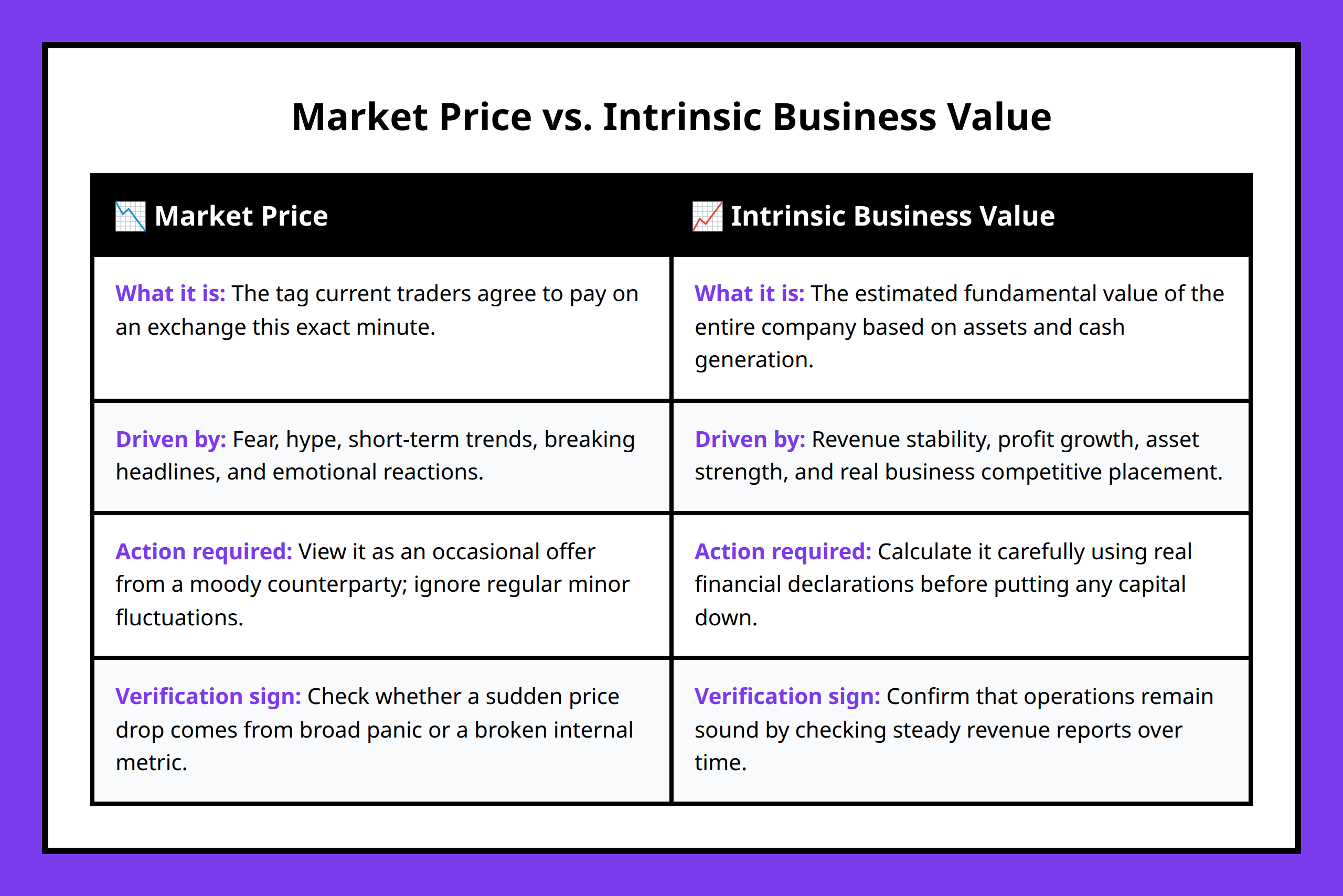
One of the most important mindset shifts in value investing is learning to separate market price from business value.
The stock market moves every day. Prices go up and down based on emotion, news, expectations, and short-term trends. But none of this changes what a business actually earns or owns.
This is why value investors often ignore daily market noise. Instead of reacting to price changes, they focus on whether the underlying business is still performing according to expectations.
For example, imagine a strong business suddenly experiences a temporary drop in its stock price because of general market fear. Nothing has changed in its operations, customer base, or earnings ability. From a value investing perspective, the business itself is unchanged—only the market perception has shifted.
This is where opportunity often appears. If the market misprices a strong business, a disciplined investor can benefit by focusing on value rather than emotion.
However, ignoring the market does not mean ignoring reality. Interest rates, economic conditions, and cost of capital can influence business value over time. Value investing simply avoids reacting emotionally to daily fluctuations that do not reflect meaningful changes in business fundamentals.
Common Mistakes New Investors Make
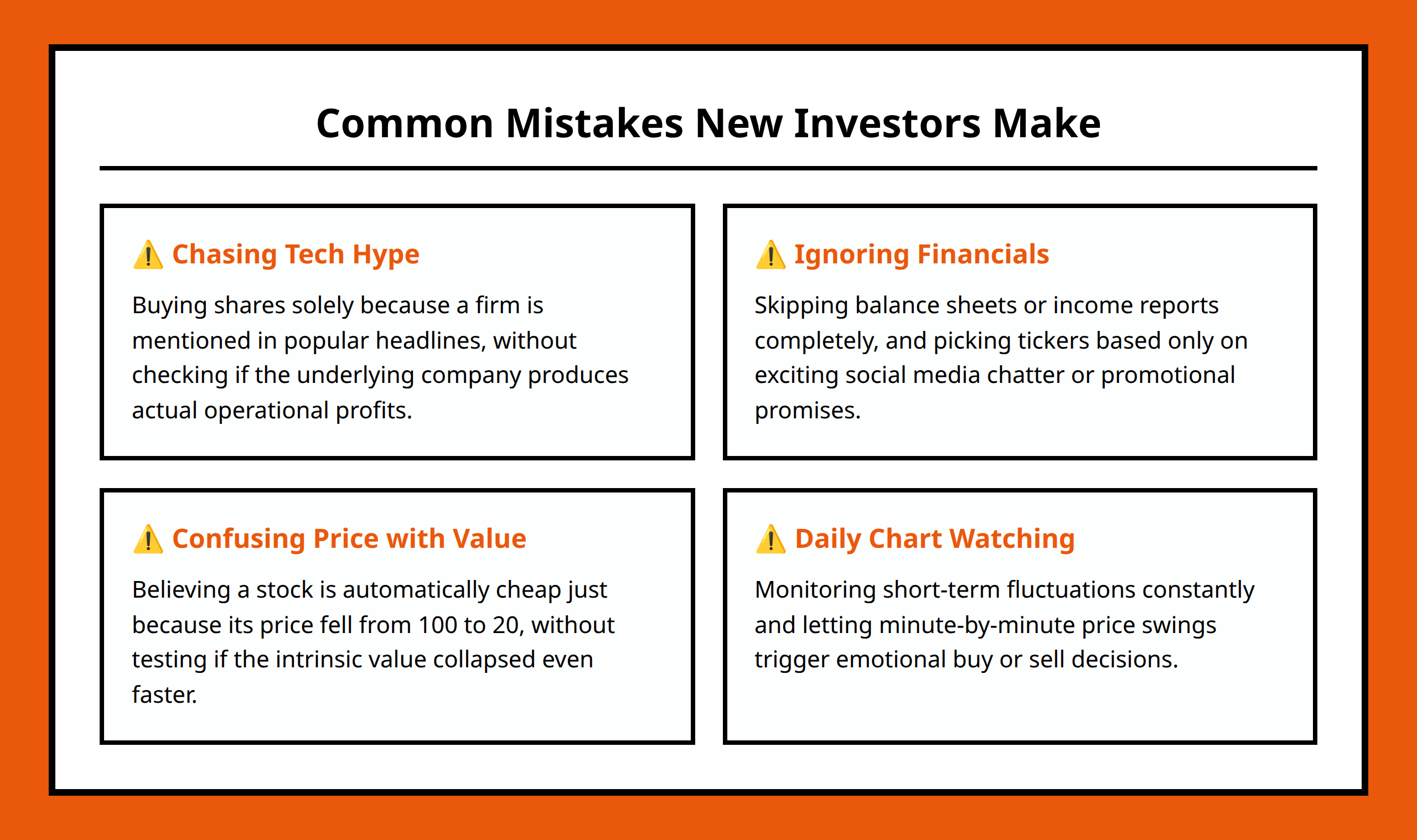
Many new investors struggle not because they lack intelligence, but because they follow the wrong signals. The most common mistake is buying based on hype. When a company becomes popular or widely discussed, it often attracts attention without regard for actual business strength.
Another common mistake is ignoring financial fundamentals. A company may have a compelling story, but without strong earnings, stable cash flow, or reasonable valuation, the investment may not be sustainable.
A third mistake is confusing price with value. A low price does not automatically mean a good investment, just as a high price does not automatically mean a bad one. The key question is whether the price reflects the true business worth.
Consider a situation where an investor buys a stock simply because it has been rising quickly. This decision is driven by momentum rather than understanding. If the price later drops due to market correction, the investor may panic, not because the business changed, but because the original decision was not based on value.
Value investing avoids this emotional cycle by grounding decisions in business analysis rather than market behavior.
FAQ
- Intrinsic Value: The real worth of a business based on its ability to generate earnings over time.
- Margin of Safety: The difference between a company’s estimated value and its purchase price, providing protection against errors.
- Business Appraisal: The process of evaluating a company’s financial strength and future earning potential.
- Market Noise: Short-term price movements and emotional reactions in the stock market that do not reflect true business value.
- Long-Term Investing Mindset: A focus on sustained business performance rather than short-term trading opportunities.
The strongest shift in investing does not come from learning more stock tips—it comes from changing how you see ownership itself. Once a stock becomes a business in your mind, the market becomes less of a guide and more of a distraction.
The next step is simple but powerful: take one company you know and stop looking at its price. Instead, ask what the business would look like if you owned it fully, and whether its earnings and stability justify becoming a long-term owner.
References:
- https://www.udemy.com/course/value-investing-fundamentals/
- https://www.reddit.com/r/valueinvesting/comments/1osbrrb/beginner_investor_how_do_value_investors_evaluate/
- https://www.reddit.com/r/valueinvesting/comments/vrtavv/fundamentals_guide_for_beginners_step_by_step/
- https://lohgronagerpartners.com/3.Loh-GronagerPartners-SuccessfulValueInvesting-PartII-ThinkingLikeaBusinessOwner.pdf
- https://www.investopedia.com/terms/v/valueinvesting.asp
- https://www.wallstreetprep.com/knowledge/value-investing-101/
- https://fooletfs.com/insights/a-beginners-guide-to-value-investing
- https://www.finra.org/investors/insights/value-investing
- https://www.youtube.com/watch?v=54_YB32hd94
- https://m1.com/blog/6-principles-of-value-investing/
