Diversification across strategies focuses on combining different sources of return rather than simply owning different assets. By blending independent investment approaches such as volatility, carry, and value strategies, investors may build portfolios that are better prepared for changing market conditions.
Many investors assume they are diversified because they own multiple assets. Yet periods of market stress often reveal a different reality. Assets that appear unrelated during normal conditions can begin moving together when uncertainty rises.
I find that one of the most overlooked questions in portfolio construction is not “How many assets do I own?” but “Where do my returns actually come from?” That distinction sits at the heart of strategy diversification.
When diversification is built around independent return drivers instead of labels alone, portfolio resilience can improve in ways that traditional diversification sometimes struggles to achieve.
Takeaways
- Diversification can weaken when assets become more correlated during periods of stress.
- Different investment strategies generate returns from different underlying drivers.
- Volatility, carry, and value strategies may respond differently to changing market environments.
- Portfolio resilience often improves when risk is spread across independent return sources.
- Evaluating where returns come from can be as important as evaluating which assets are owned.
The Limits of Traditional Diversification
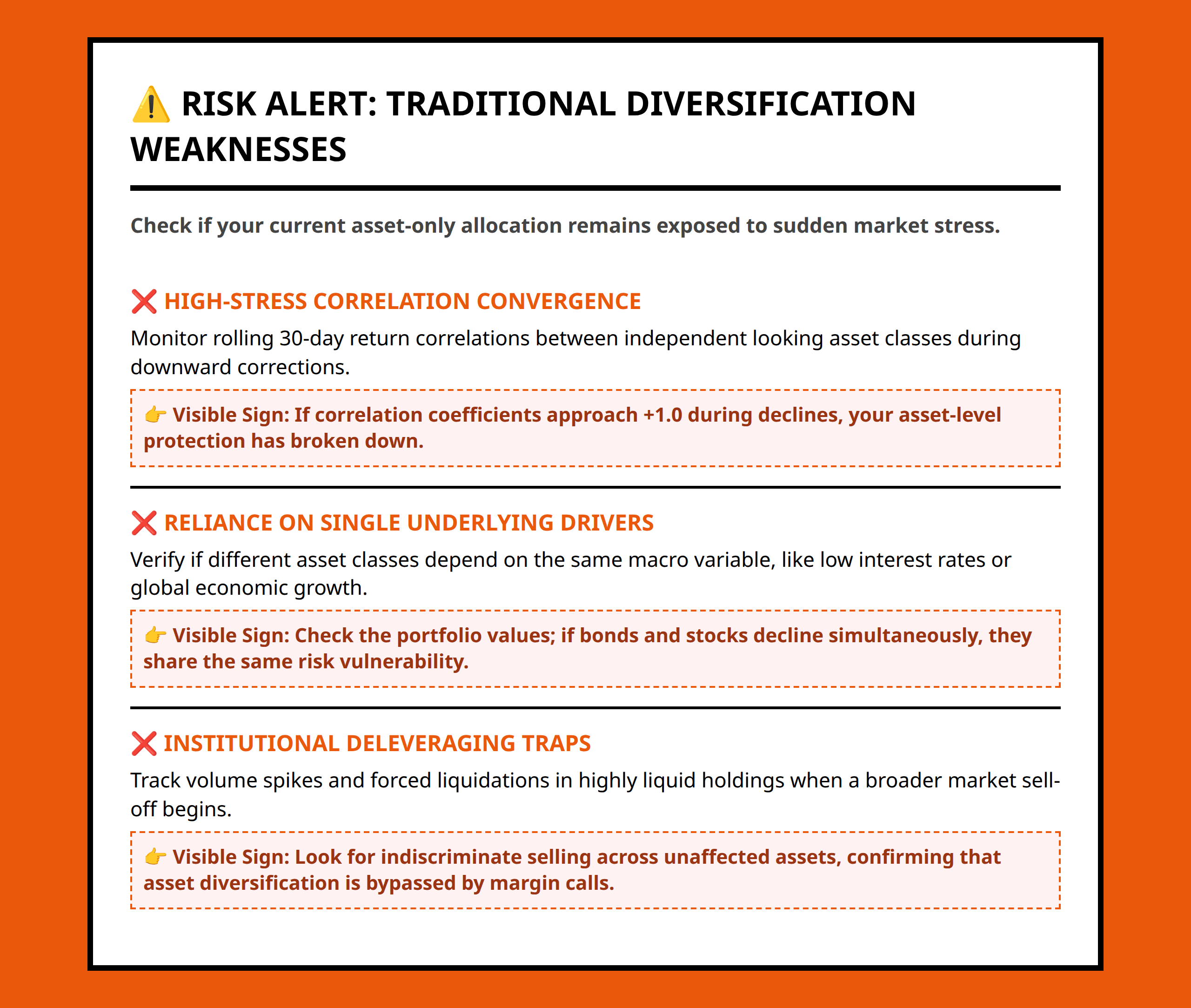
Asset diversification alone may not always provide the protection investors expect.
Traditional diversification typically focuses on owning different assets, sectors, or markets. The assumption is that if one investment performs poorly, another may perform better and help offset the damage.
That approach can work under many conditions. The challenge is that relationships between assets are not fixed. Correlations can change over time, especially during periods of elevated uncertainty.
When investors need diversification most, many assets may begin reacting to the same fears, concerns, or economic pressures. A portfolio that appeared well diversified on paper can suddenly become more concentrated than expected.
This does not mean asset diversification is ineffective. It means that asset diversification alone may not fully address the problem of shared risk drivers.
Looking Beyond Assets to Return Sources
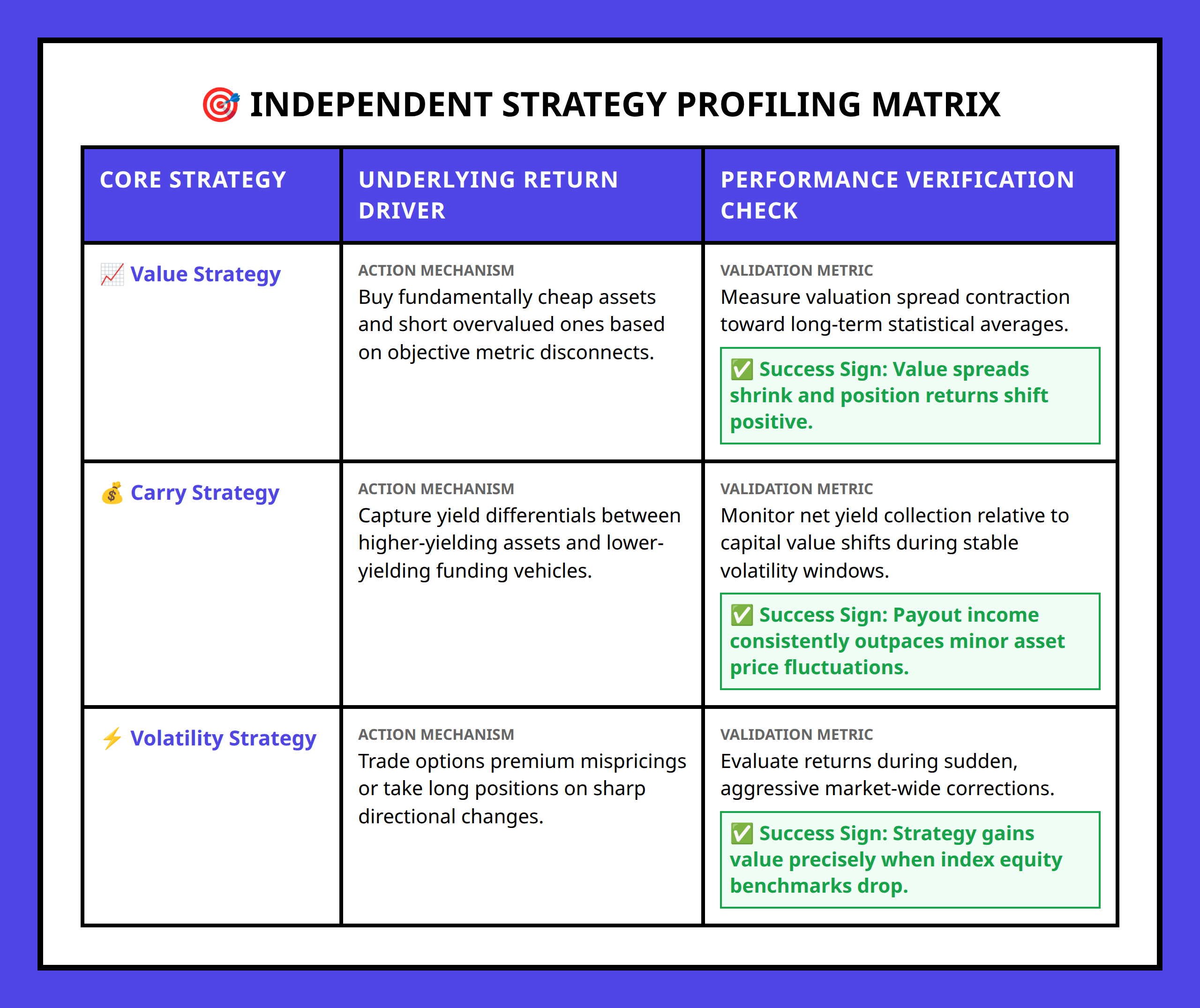
The deeper question is not what you own, but why those investments generate returns.
Every investment strategy depends on certain underlying forces. Some strategies benefit from volatility-related opportunities. Others draw returns from carry-related opportunities. Others seek value-based opportunities.
These return sources are fundamentally different from one another.
Because they rely on different economic drivers, they may react differently when market conditions change. This creates the possibility of stronger diversification than simply adding more assets that ultimately depend on similar factors.
An investor who owns several assets influenced by the same market forces may have less diversification than expected. By contrast, an investor who combines multiple independent return sources may be spreading risk across a broader set of opportunities.
Diversifying Across Return Sources
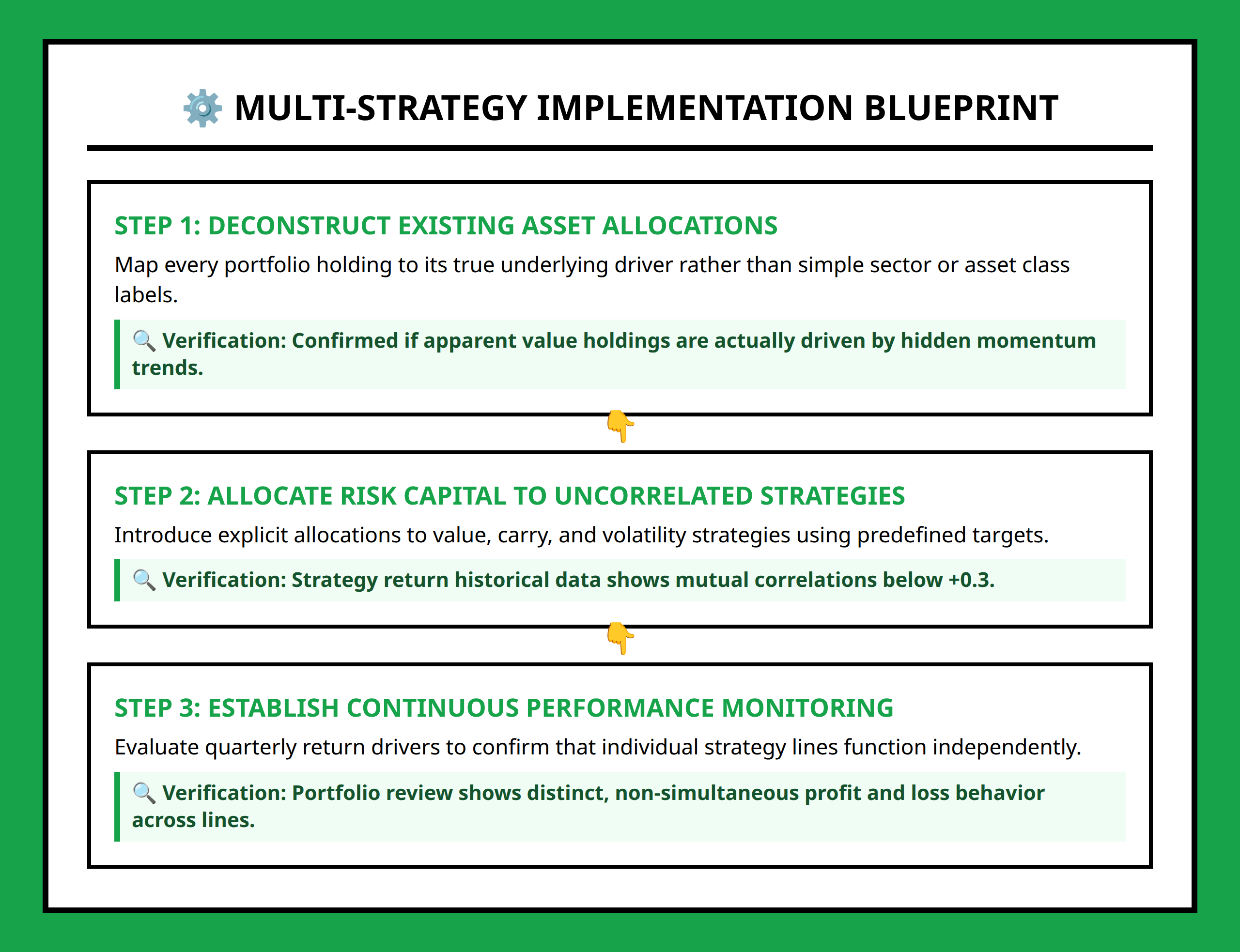
Strategy diversification aims to combine approaches that are driven by different causes.
Three examples highlighted within this framework are volatility, carry, and value strategies.
| Strategy Type | Primary Return Driver | Diversification Benefit |
|---|---|---|
| Volatility Strategy | Exposure to uncertainty-related premiums | Different response to market stress |
| Carry Strategy | Compensation linked to yield-related opportunities | Distinct source of returns |
| Value Strategy | Opportunities based on valuation differences | Independent decision framework |
The goal is not to predict which strategy will perform best next year. The goal is to avoid depending too heavily on any single return source.
An illustrative example may help. Imagine two portfolios. The first contains many investments, but most of them ultimately depend on the same market environment to succeed. The second contains fewer holdings but draws returns from several independent strategies.
Although the second portfolio may appear simpler, it may have stronger diversification because its success is not tied to a single dominant factor.
Why Independent Drivers Matter
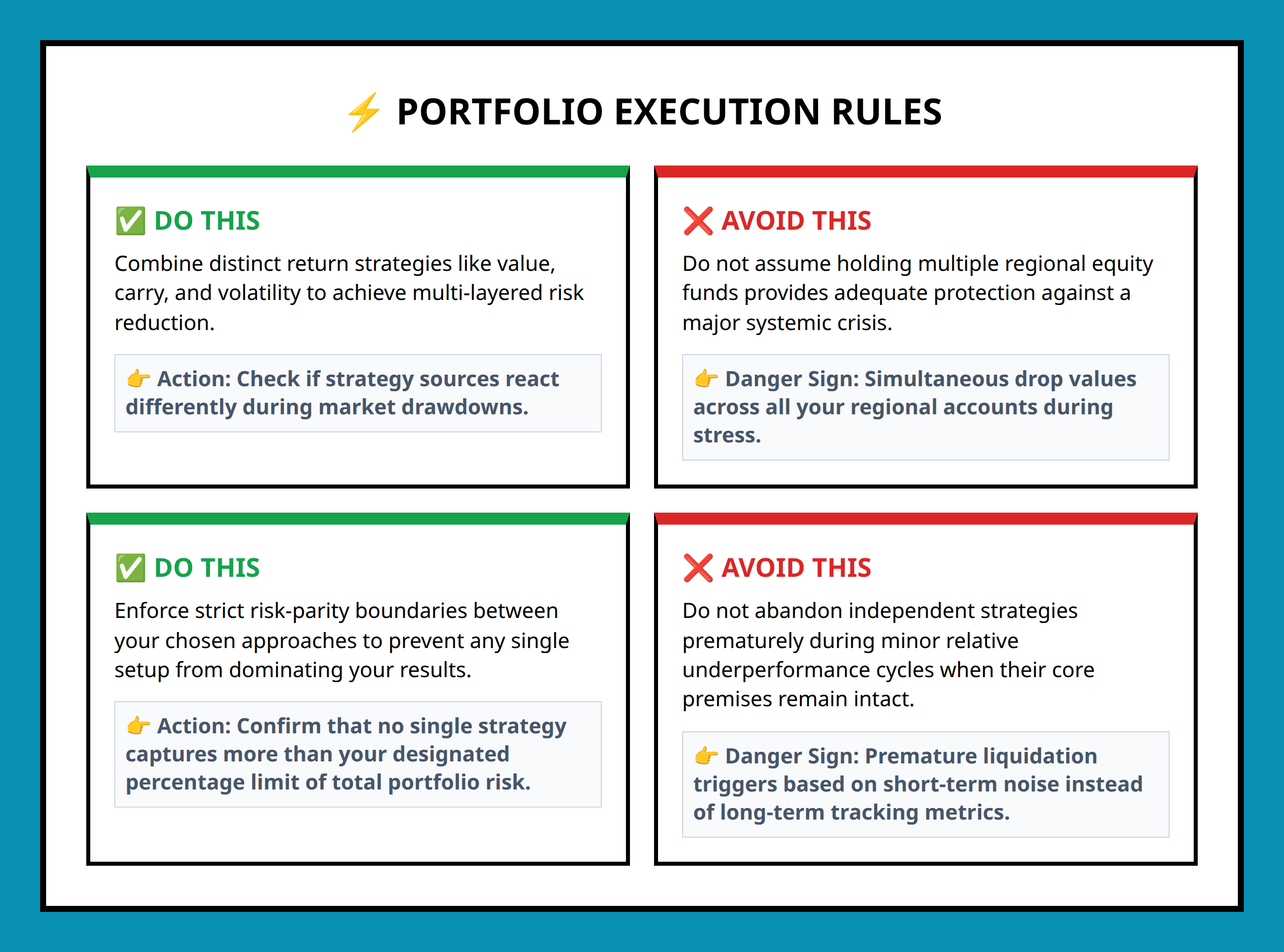
The strength of diversification comes from differences, not similarities.
When strategies respond differently to market events, they can help smooth the overall portfolio experience. Not every strategy will perform well at the same time, and that is often a feature rather than a flaw.
Many investors unintentionally concentrate risk by seeking multiple investments that all benefit from the same conditions. Strategy diversification encourages a different mindset. Instead of asking whether investments look different, investors ask whether the reasons those investments generate returns are actually different.
This shift often leads to a more meaningful understanding of portfolio risk.
Best Practices for Portfolio Construction
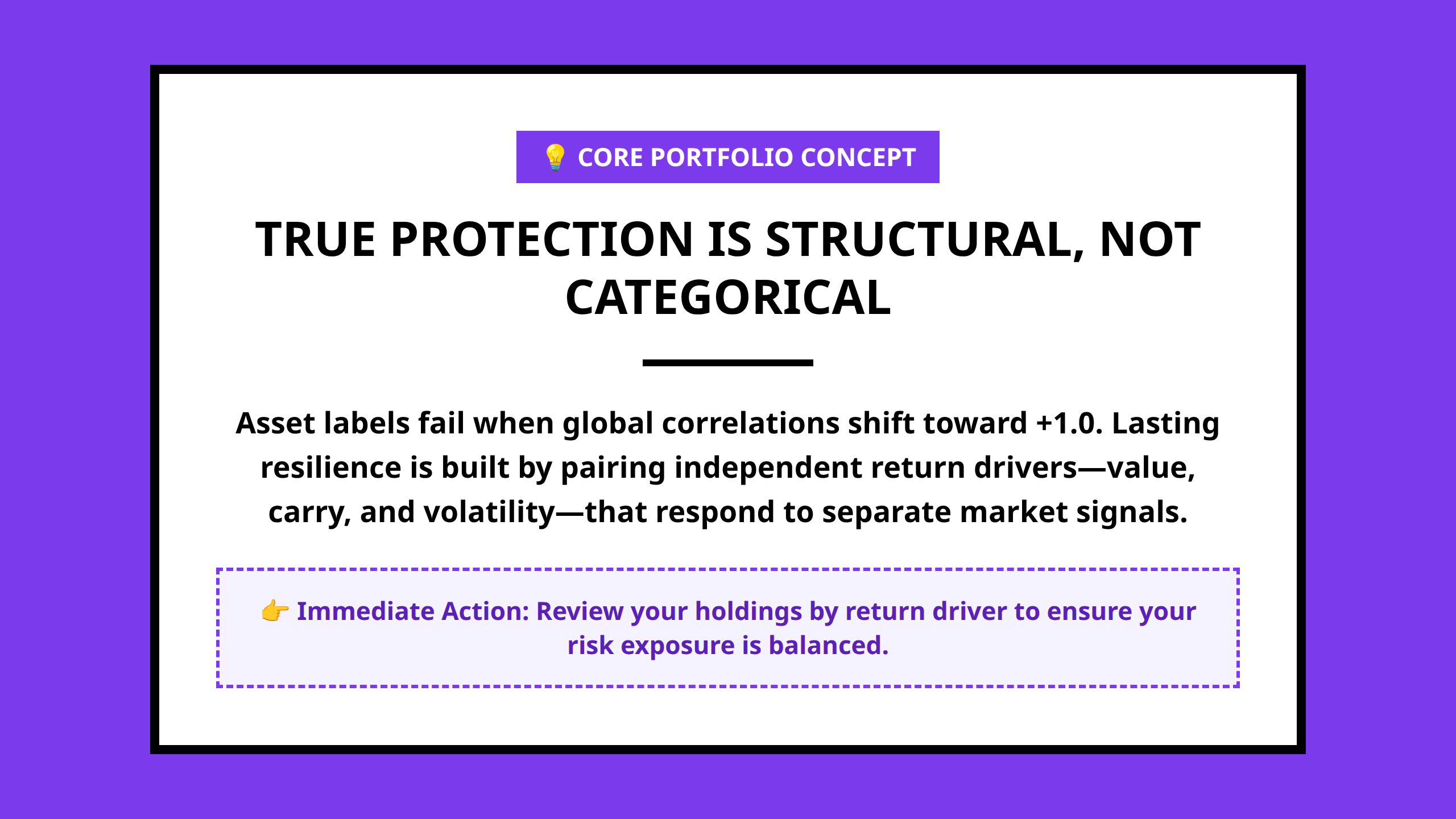
Effective diversification requires balancing risk sources rather than simply increasing the number of holdings.
One useful principle is to evaluate concentration at the strategy level. A portfolio can contain many positions while still depending heavily on one return source.
Another principle is to combine diversification with disciplined portfolio rules. Strategy diversification works best when it is part of a broader framework that includes risk management and systematic decision-making.
It is also important to avoid chasing recent performance. Diversification often feels uncomfortable because some strategies will inevitably lag behind others during certain periods. Removing those strategies simply because they are temporarily unpopular can weaken the benefits diversification was intended to provide.
A practical next step is to review your portfolio and identify its major return drivers. If several investments depend on the same underlying source of returns, your diversification may be narrower than it appears.
FAQ
- Diversification: The practice of spreading risk across different investments, strategies, or return sources.
- Strategy Diversification: Diversifying across fundamentally different investment approaches rather than only across assets.
- Correlation: A measure of how closely different investments move in relation to one another.
- Volatility Strategy: An investment approach that seeks returns related to market uncertainty and volatility conditions.
- Carry Strategy: An approach that seeks returns associated with yield-related opportunities.
- Value Strategy: An investment approach that focuses on opportunities created by valuation differences.
- Return Driver: The underlying reason or economic force that generates returns for a strategy.
