The risk and return principle is one of the most important ideas in investing. Understanding it can help you evaluate opportunities more realistically, avoid costly mistakes, and protect your savings from investments that promise more than they can safely deliver.
Many investors are naturally attracted to high returns. That is understandable. If one investment appears to offer twice the return of another, it seems reasonable to assume it is the better choice.
What I find interesting is that investing rarely works that way. The promise of higher returns often comes attached to a greater possibility of loss. Many investment mistakes begin when people focus entirely on the reward and pay little attention to the risk that makes that reward possible.
Takeaways
- Higher expected returns usually require accepting higher levels of risk.
- Temporary success does not eliminate underlying investment risk.
- A realistic investor evaluates possible losses before focusing on potential gains.
- Risk should be viewed as part of the investment, not as a separate consideration.
- Protecting capital is often more important than chasing extraordinary returns.
Understanding the Risk-Return Relationship
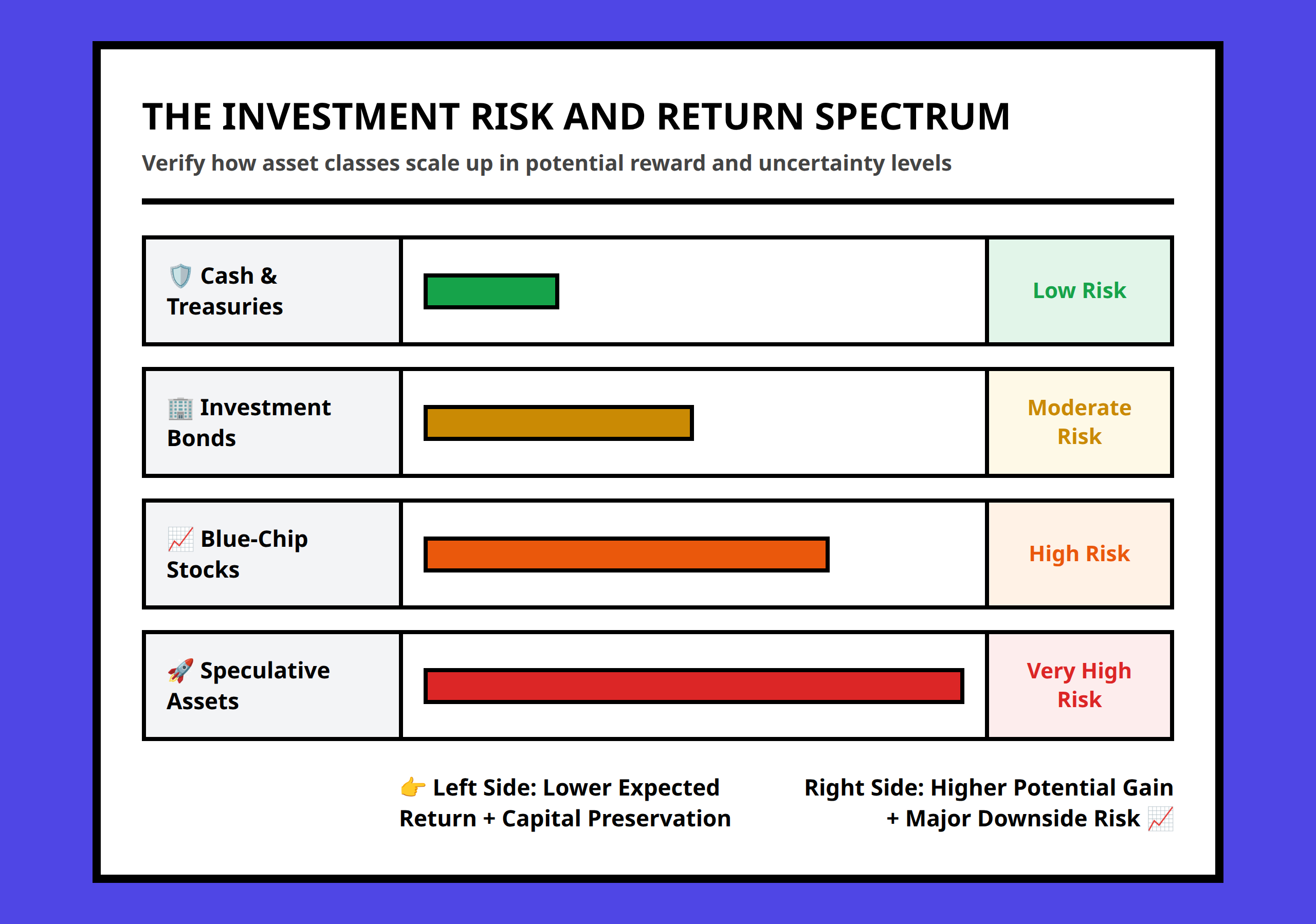
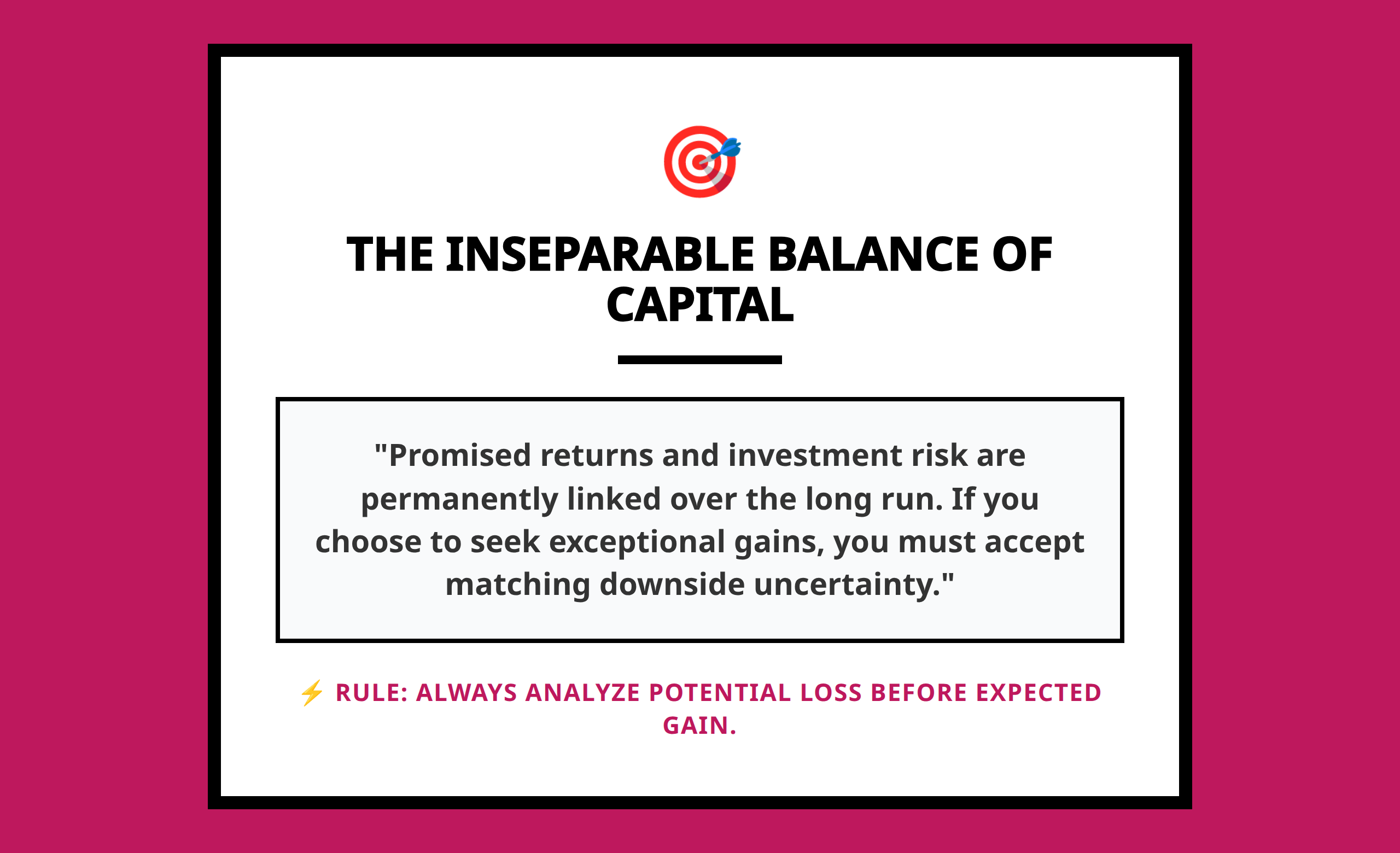
The basic relationship is simple: the greater the potential reward, the greater the uncertainty that typically accompanies it.
This principle appears repeatedly across investment categories. Investments that offer modest returns often have lower levels of uncertainty. Investments that advertise exceptional returns usually expose investors to greater risks, whether those risks come from market volatility, economic changes, business failure, or speculation.
A useful way to think about risk and return is to view them as two sides of the same coin. Many investors would like the reward without the uncertainty, but over long periods that combination is rare.
An investment may appear safe during favorable economic conditions. Rising markets, strong economic growth, or widespread optimism can create the impression that risk has disappeared. Eventually conditions change, and the underlying risk becomes visible again.
That is why evaluating risk cannot depend solely on recent performance. A successful investment today may still carry substantial risk tomorrow.
Why High Returns Can Be Misleading
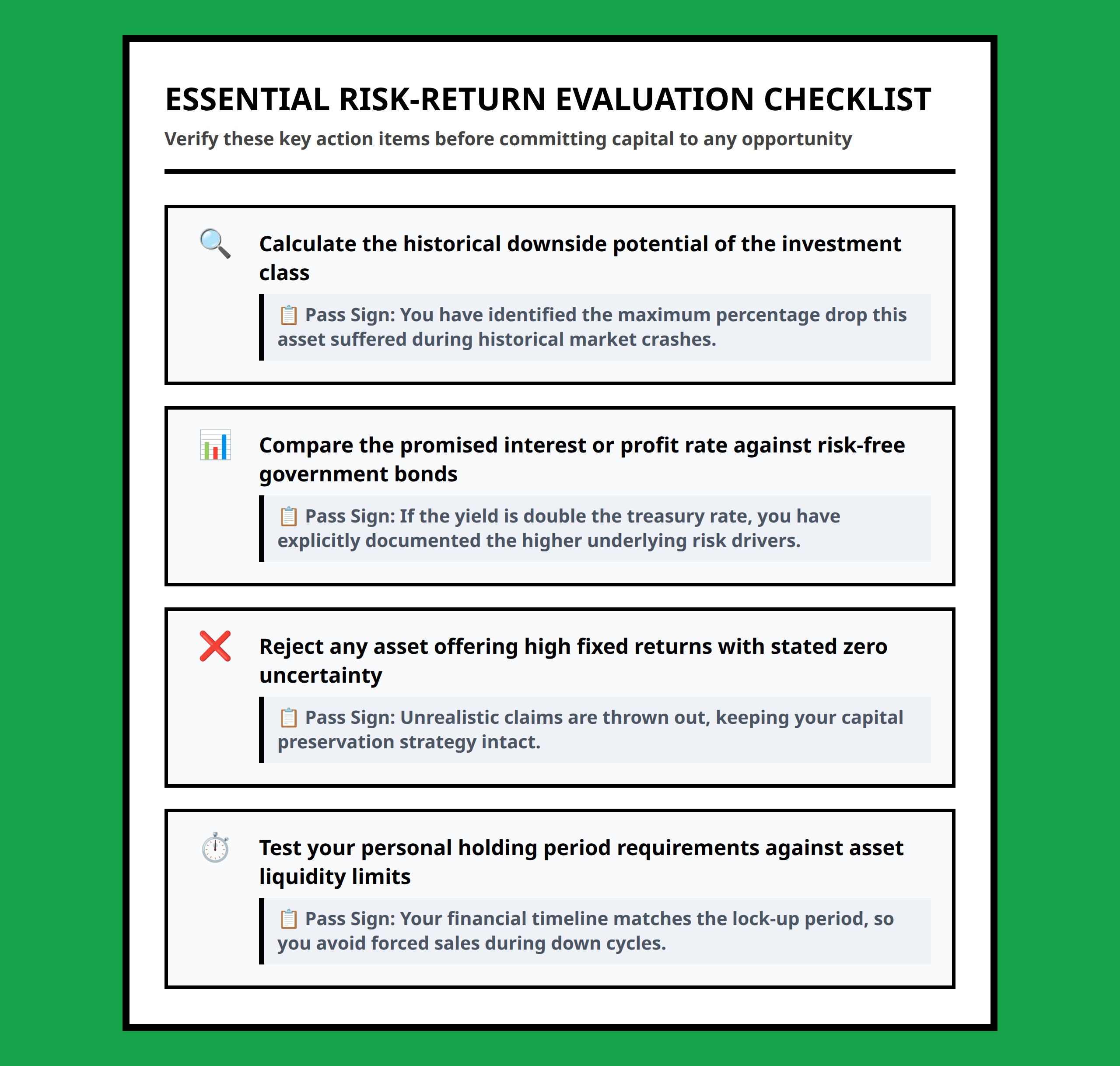
The danger is not that high returns exist. The danger is assuming that high returns come without meaningful tradeoffs.
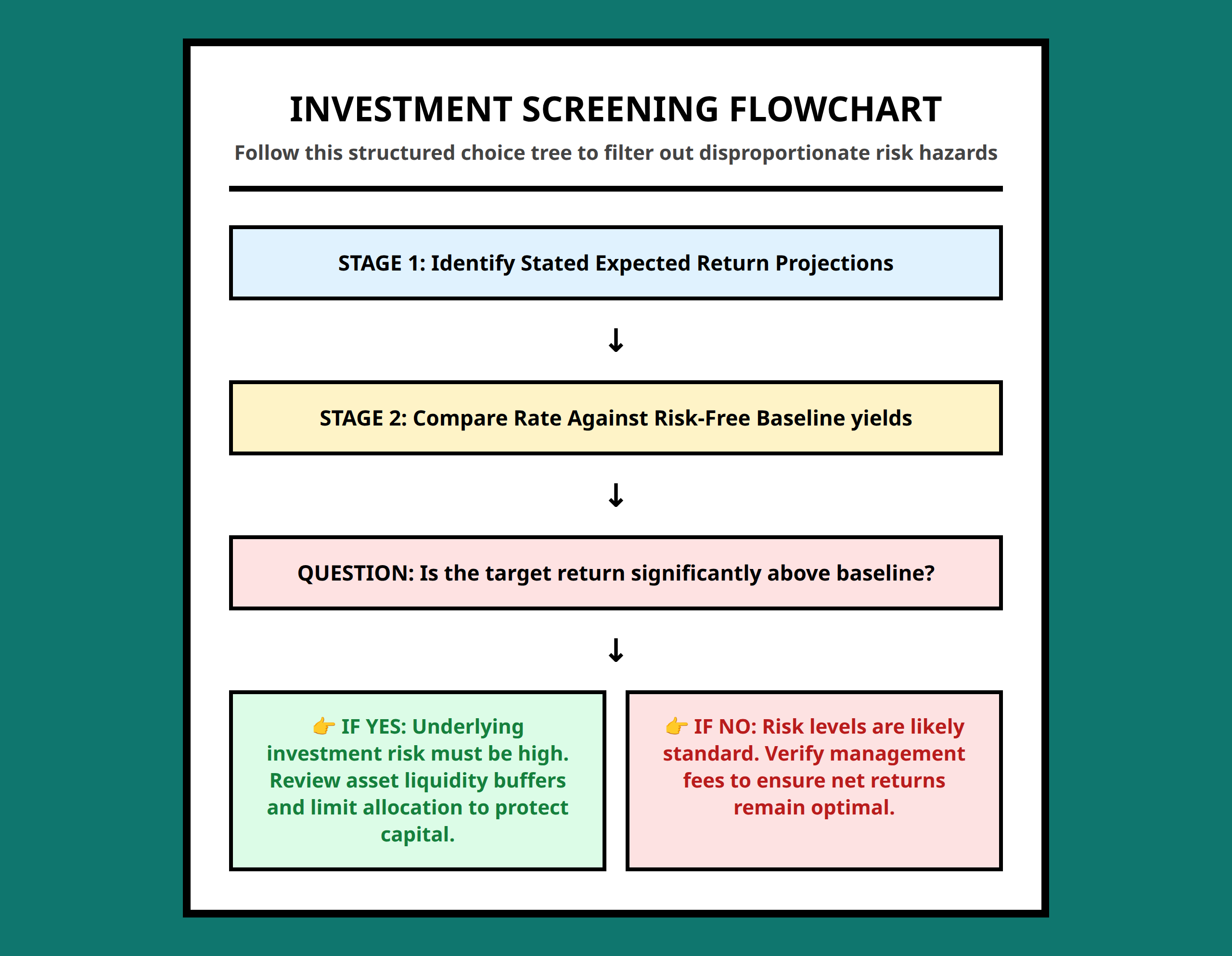
When investors see an unusually attractive opportunity, the first question should not be “How much can I make?” It should be “What risk am I accepting to earn this return?”
For example, imagine two investment opportunities. One offers moderate growth with a long history of stability. The other promises dramatically higher gains in a short period. The second option may succeed, but it also may expose investors to losses that the first option is designed to avoid.
This does not mean investors should avoid every higher-risk opportunity. It means they should understand exactly what they are accepting before committing their money.
| Potential Return | Typical Risk Level | Investor Consideration |
|---|---|---|
| Lower | Lower | Focus on preservation and stability |
| Moderate | Moderate | Balance growth and protection |
| High | High | Accept greater uncertainty and possible loss |
How Investors Can Evaluate Risk More Realistically
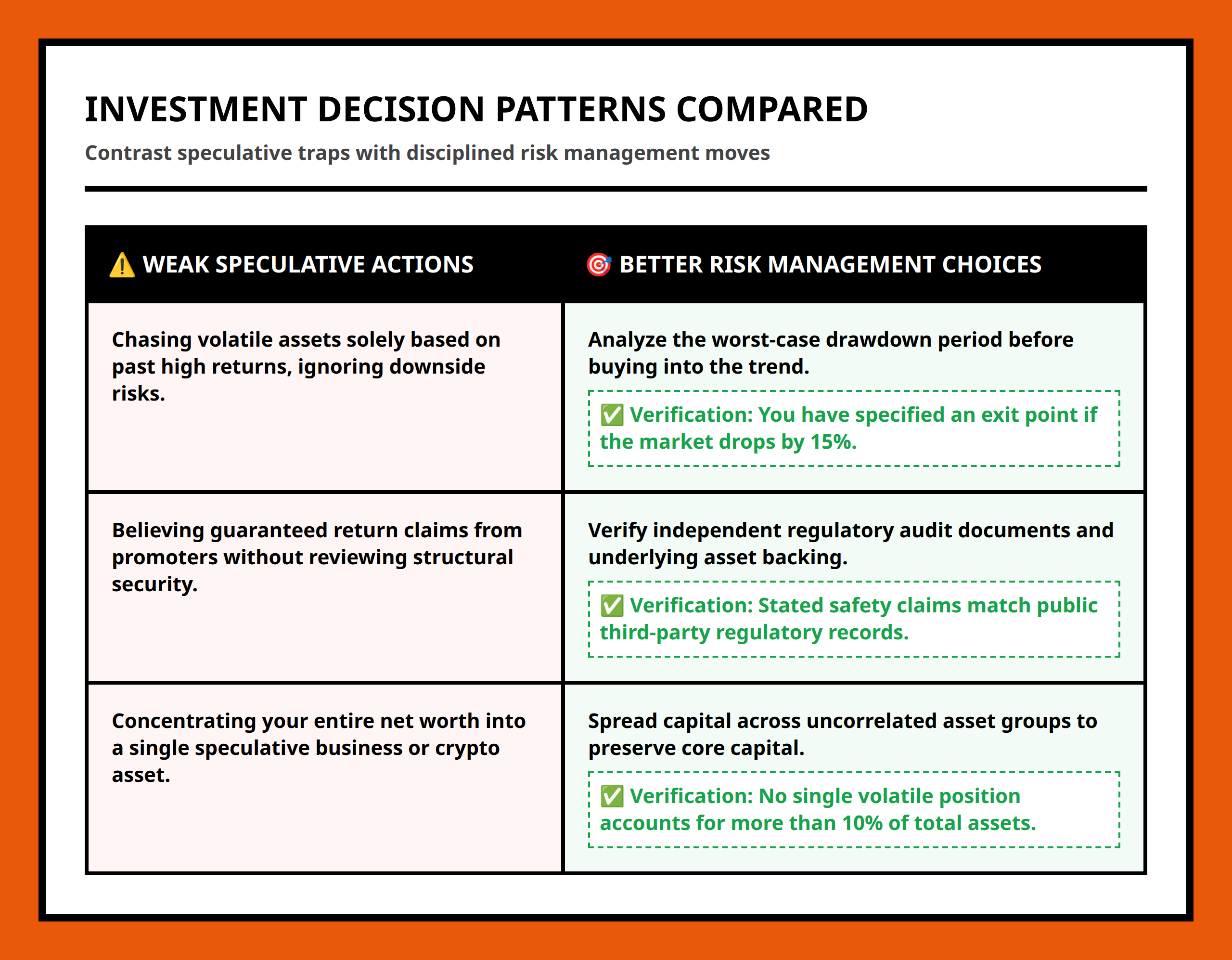
A practical investor looks at potential losses before becoming excited about potential gains.
One useful habit is to ask what could go wrong. Every investment carries risks, even those that appear safe on the surface. Understanding those risks helps create better decisions.
Another important step is comparing upside potential with downside exposure. If the possible reward is attractive but the possible loss would seriously damage long-term financial goals, the opportunity may not be appropriate regardless of how appealing the return appears.
Risk evaluation also requires patience. Long-term investing is often less about finding extraordinary opportunities and more about consistently avoiding major mistakes.
Many successful investors focus on preserving capital first and pursuing growth second. That order may sound conservative, but it reflects an important reality: money that has been lost must first be recovered before it can grow.
Common Risk Assessment Errors
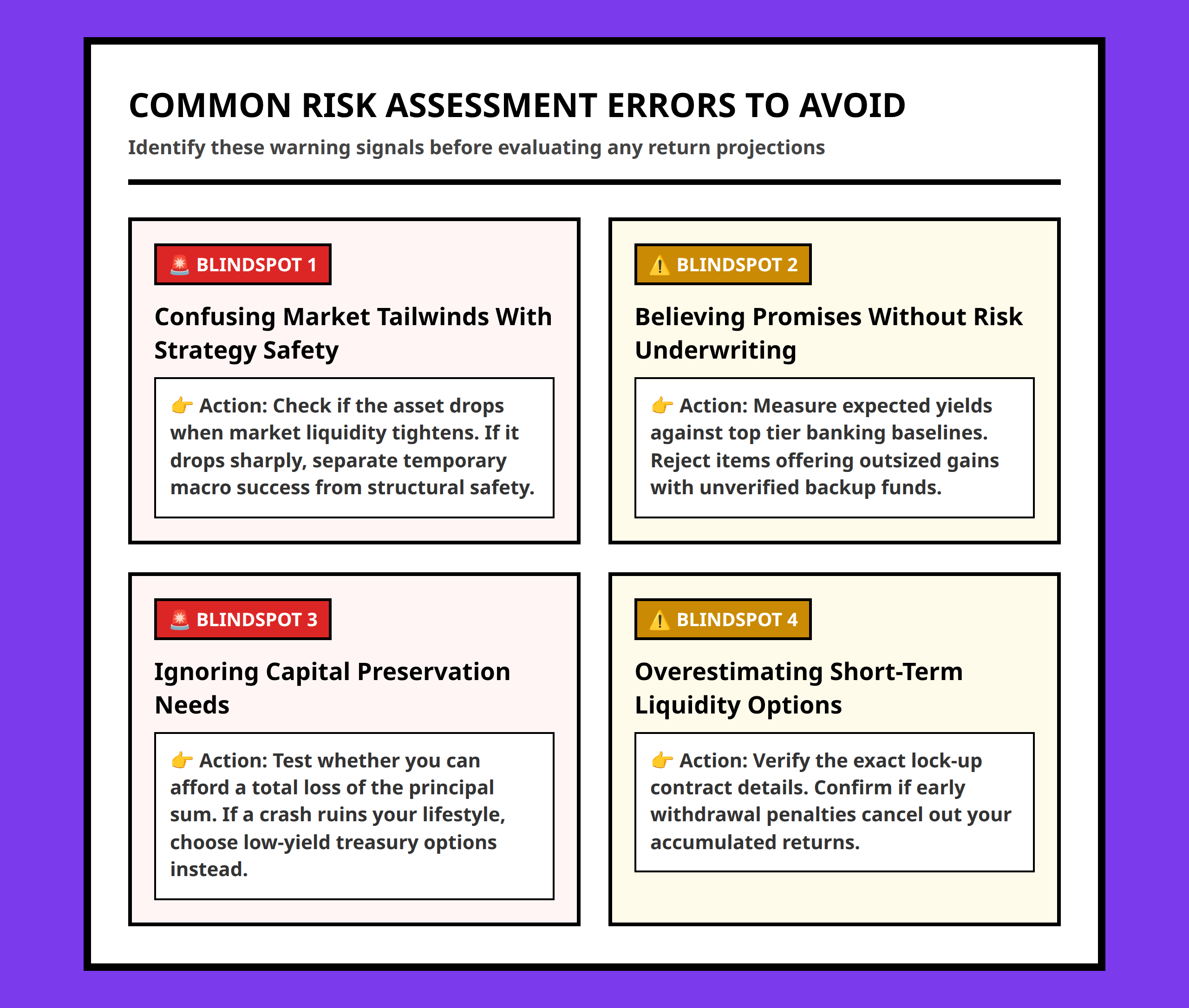
Most investment mistakes occur because people misjudge risk rather than return.
Believing Promises Without Examining Risk
Some investors hear impressive return projections and stop their analysis there. They assume the promised outcome is the most likely outcome.
A better approach is to investigate the factors that could prevent those returns from materializing.
Confusing Recent Success With Safety
An investment that has performed well for several years may still be risky. Good results do not automatically eliminate uncertainty.
Favorable conditions can temporarily hide weaknesses that become visible only when markets or economic conditions change.
Ignoring Downside Potential
Many investors spend far more time calculating gains than estimating losses.
Before making any investment decision, it is worth asking whether the potential loss is something you could realistically tolerate financially and emotionally.
Assuming Risk Can Be Eliminated
Risk can often be reduced through diversification and careful planning, but it cannot be completely removed. Every investment involves uncertainty because the future is never fully predictable.
Why Capital Preservation Deserves More Attention
One lesson that many investors learn only after experiencing losses is that protecting capital matters as much as growing it.
A strong investment strategy balances opportunity with protection. Growth remains important, but it should not come at the expense of exposing all available resources to unnecessary danger.
This balanced mindset encourages investors to think beyond immediate returns and focus on long-term financial durability.
FAQ
- Risk: The possibility that an investment may not perform as expected or may lose value.
- Return: The gain or income earned from an investment over time.
- Capital Preservation: An investment approach focused on protecting existing money from significant losses.
- Diversification: Spreading investments across different categories to reduce dependence on a single outcome.
- Downside Risk: The potential for an investment to decline in value or produce losses.
- Speculation: Investing primarily in pursuit of large gains while accepting a higher degree of uncertainty.
The most valuable question in investing is often not “How much can I make?” but “What am I risking to earn it?” Before making your next investment decision, write down both answers. Looking at them side by side can reveal far more than a projected return ever will.
